
Study in Australia
Internationally respected universities, a well-established framework for international students and a wide choice of study pathways — alongside vibrant cities, coastal living and extraordinary natural landscapes.
Australia may suit you if…
- You want strong universities in an English-speaking country outside Europe and North America.
- You value climate and lifestyle alongside academic quality.
- You are interested in fields such as environmental, marine or health sciences.
- A February start suits your plans better than a September intake.
Advantages and trade-offs
Australia offers a distinctive study experience, but understanding the practical trade-offs is essential before making a decision.
Advantages
- Well-regarded universities across a range of disciplines.
- A legal framework designed to protect international students.
- Opportunities to work while studying, subject to visa conditions.
- Established teaching and research in health, environmental and marine sciences.
- Large, diverse international student communities.
Trade-offs
- Tuition and day-to-day living costs can be high.
- Travel from Europe, Africa and the Middle East is long and can be expensive.
- The academic calendar differs from that of many Northern Hemisphere countries.
- Rental markets in Sydney and Melbourne can be particularly competitive.
What you can study
Australia offers routes for students at different stages of their education:
- Secondary school.
- Vocational education and training (VET).
- Foundation and diploma pathways.
- Undergraduate degrees.
- Master's degrees.
- PhD and other doctoral research.
- English-language programmes.
Popular subjects
- Nursing and health sciences.
- Engineering.
- Business and accounting.
- Information technology.
- Environmental and marine science.
- Education.
- Hospitality and tourism.
Entry requirements and intakes
Academic requirements
Australian universities assess international school qualifications against their published entry requirements and country-specific equivalences. If your qualification does not meet direct-entry requirements, a foundation or diploma pathway may be an option.
Postgraduate programmes generally require a recognised bachelor's degree. Professional and specialist courses may have additional academic, portfolio, placement or registration requirements.
English-language requirements
You may need to meet separate English-language requirements for admission and for your Student visa. The accepted evidence and minimum scores are not always the same. Some institutions offer English-language programmes that can be taken before the main course, subject to entry and visa requirements.
Typical intakes
February is the main university intake, with a substantial second intake in July. Some institutions and programmes offer other start dates. Confirm the specific intake and application deadline for your chosen course.
Application timeline
Start early enough to compare courses, understand entry requirements and prepare funding. The following is an indicative timeline, counted backwards from your intended course start date.
10–12 months before
Research institutions and courses, check how your qualifications will be assessed and begin planning your budget.
7–9 months before
Prepare or sit any required English-language test and submit applications in line with individual deadlines.
5–6 months before
Review your offers, meet any outstanding conditions and arrange the steps needed to receive a Confirmation of Enrolment (CoE).
3–4 months before
Arrange appropriate Overseas Student Health Cover and, when you have the required documents, submit your Student visa application.
1–2 months before
Finalise accommodation, travel and practical arrival plans once your immigration and enrolment arrangements are in place.
Tuition, living costs and scholarships
Tuition fees
Tuition varies by institution, qualification and subject. Clinical, laboratory-based and veterinary programmes can be especially expensive, while some vocational and pathway programmes cost less than university degrees. Check the current course fee, payment schedule and any additional charges directly with the provider.
Living costs and financial capacity
The current Student visa financial-capacity benchmark for an individual student is A$29,710 for 12 months of living costs, in addition to the applicable tuition and travel costs. This is a visa evidence requirement, not a guarantee that A$29,710 will cover your actual living expenses. Your budget may need to be higher, particularly in expensive rental markets or depending on your accommodation and lifestyle.
Allow separately for Overseas Student Health Cover (OSHC), flights, accommodation deposits, study materials, transport and everyday expenses. Use the official Study Australia Cost of Living Calculator to estimate costs for your preferred location and lifestyle.
Scholarships
Universities offer merit-based and other scholarships, including awards for students from particular countries or studying specific subjects. Australian government scholarship programmes also exist, with some focused on postgraduate study. Funding is competitive, and many institutional awards cover only part of the cost. Check eligibility, deadlines and the value of each award before relying on it in your budget.
Cost guidance: Fees, scholarships, official financial requirements and actual living costs change. Confirm current figures before applying, paying a deposit or making financial commitments.
Student visa (subclass 500)
Most international students study in Australia on a Student visa (subclass 500). Students generally need to enrol in an eligible course with a provider registered on the Commonwealth Register of Institutions and Courses for Overseas Students (CRICOS) and receive a Confirmation of Enrolment before applying.
Depending on your course and circumstances, the application may require:
- A Confirmation of Enrolment (CoE).
- Evidence of English-language ability, where required.
- Evidence of sufficient financial capacity.
- Appropriate Overseas Student Health Cover (OSHC).
- A valid passport and identity documents.
- Evidence addressing the Genuine Student requirement.
- Health and character checks.
- Other documents relevant to your application.
Check the Department of Home Affairs Student visa guidance and its document checklist for the requirements that apply to you. Student visa holders generally need to maintain appropriate OSHC for the required period.
Student visa application fee
As of October 2026, the base application charge for most primary Student visa applicants starts at A$2,500, following the increase on 1 July 2026. Lower charges apply to certain eligible applicants. Additional charges may apply depending on the application. Check the official visa pricing information before paying.
Important change from 2 October 2026
New Student visa rules affect who can apply for or be granted a Student visa while already in Australia and whether family members can be included in an application. Exemptions apply in certain circumstances, but family members cannot be added to a Student visa after it has been granted.
If you are already in Australia, planning further study or hoping to study with family members, review the Department of Home Affairs' October 2026 rules before committing to a course, making payments or arranging travel.
Working while studying
Eligible Student visa holders can generally work up to 48 hours per fortnight while their course is in session and without a set hourly limit during scheduled course breaks. Different conditions apply in certain circumstances, including for some master's by research and doctoral students after their course has started.
Students whose visas were granted while outside Australia generally cannot start work until their course begins, unless they already held a visa permitting work. Always check the conditions attached to your own visa.
International students have workplace rights under Australian law. From 1 July 2026, the National Minimum Wage is A$26.44 per hour for employees to whom that rate applies. Many jobs are covered by awards or other arrangements with different minimum rates, and casual employment can attract separate entitlements. Check the Fair Work Ombudsman for current pay and workplace rules.
Post-study work: Temporary Graduate visa (subclass 485)
Australia offers some eligible graduates the opportunity to remain temporarily and gain work experience after completing an Australian qualification. A graduate visa is not automatic.
Under the Post-Higher Education Work stream of the Temporary Graduate visa (subclass 485), standard stay periods are currently:
- Bachelor's degree: 2 years.
- Master's by coursework or extended master's: 2 years.
- Master's by research: 3 years.
- Doctoral degree / PhD: 3 years.
Different periods apply to some passport holders, including certain Indian nationals under the Australia–India Economic Cooperation and Trade Agreement. Other exceptions may also apply.
Graduate visa age requirement
For most applicants to the relevant subclass 485 streams, the maximum age is 35 years or under at the time of application. Certain applicants, including those using a master's by research or doctoral qualification and eligible Hong Kong or British National Overseas passport holders, may qualify if they are under 50.
Planning to work after graduation? Your age, qualification, Australian study history, English ability, health cover and other visa requirements can affect eligibility. Check the current subclass 485 rules before selecting a course if post-study work is central to your plans.
Longer-term work and skilled migration
After gaining relevant qualifications and experience, some graduates may be eligible to explore other work or skilled migration routes. Options can include employer-sponsored, points-tested and regional pathways, depending on occupation, skills, employment, nomination requirements and individual circumstances.
Examples include:
- Skills in Demand visa (subclass 482).
- Skilled Independent visa (subclass 189).
- Skilled Nominated visa (subclass 190).
- Skilled Work Regional visa (subclass 491).
- Other eligible employer-sponsored or regional routes.
The Skills in Demand visa replaced the former Temporary Skill Shortage visa in December 2024. Requirements, occupation lists and visa settings differ by pathway and can change.
Studying in Australia does not guarantee a longer-term work visa or permanent residence. Eligibility depends on the immigration rules in force when you apply and your individual circumstances.
Why students choose Australia
Australia combines large international cities with beaches, outdoor living, major sporting and cultural events and some of the world's most distinctive landscapes. Students can choose between the energy of Sydney and Melbourne, the warmer climate of Brisbane and the Gold Coast, Perth's west-coast lifestyle, or smaller capitals such as Adelaide, Canberra and Hobart.
Outside the classroom, student life can include:
- Beaches, swimming and surfing.
- National parks, hiking and coastal walks.
- Exploring the Great Barrier Reef.
- Encounters with wildlife unique to Australia.
- Outdoor cafés, markets and restaurants.
- Music, arts and cultural festivals.
- Cricket, rugby, tennis and Australian rules football.
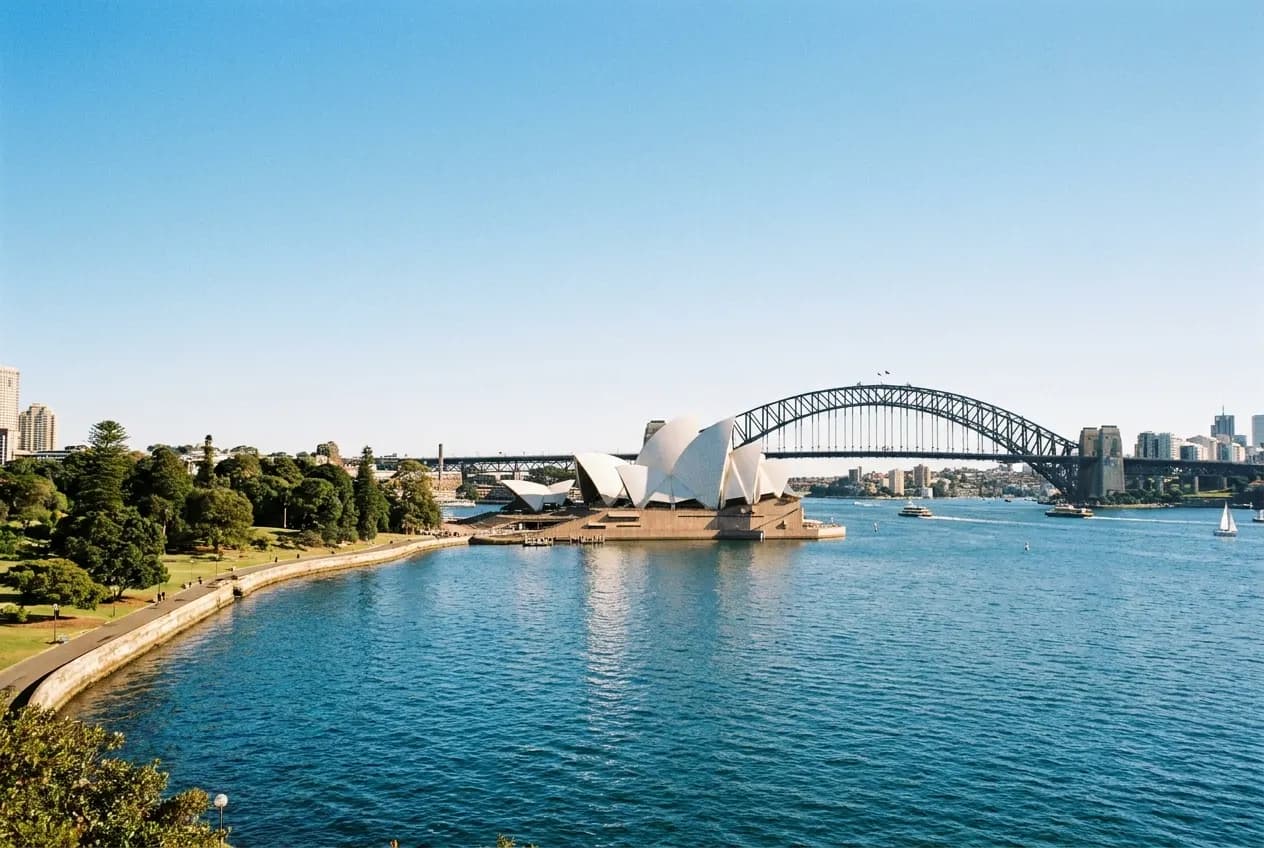
- Sydney Harbour and its famous landmarks.
- Melbourne's food, coffee and live music scenes.
- Road trips along Australia's coastline.
- Winter skiing in parts of Victoria and New South Wales.
- Discovering regional Australia during university breaks.
Find your Australian city
Sydney
Best for: Big-city life, finance, business, technology and an iconic coastal lifestyle.
Sydney combines a large student and professional environment with beaches, harbour life and internationally recognised landmarks.
Highlights: Sydney Opera House · Harbour Bridge · Bondi Beach · Manly · restaurants · nightlife · finance · technology.
Melbourne
Best for: Culture, sport, food, arts and student life.
Melbourne is known for its cafés, restaurants, live music, galleries and major sporting events. It can appeal to students looking for a large international city with a strong university and cultural atmosphere.
Highlights: Coffee culture · Australian Open · Formula 1 · Australian rules football · arts · laneways · restaurants · live music.
Brisbane
Best for: Warmer weather, growing industries and a more relaxed city feel.
Brisbane combines a major-city setting with a subtropical climate and access to some of Queensland's best-known coastal destinations and natural attractions.
Highlights: Warm climate · South Bank · outdoor living · Gold Coast · Sunshine Coast · business · technology.
Gold Coast
Best for: Beaches, tourism, hospitality and outdoor living.
The Gold Coast offers a distinctive student experience shaped by its long coastline, surf beaches and warm climate.
Highlights: Surfing · beaches · theme parks · outdoor lifestyle · hospitality · tourism.
Perth
Best for: Beaches, engineering, resources and west-coast living.
Perth is far from Australia's east-coast cities and has a character of its own, with riverside and coastal living and strong links to resources, engineering and mining industries.
Highlights: Beaches · Swan River · sunshine · outdoor activities · engineering · resources.
Adelaide
Best for: A smaller city, festivals, food and potentially lower living costs.
Adelaide has a more compact centre than Sydney or Melbourne, a busy festival calendar, nearby beaches and easy access to the Adelaide Hills. Living costs may be lower than in larger cities, depending on your circumstances.
Highlights: Festivals · food · beaches · Adelaide Hills · surrounding wine regions · compact city centre.
Canberra
Best for: Government, public policy, international relations and capital-city life.
Australia's capital offers connections to government, policy, research and national institutions, alongside green spaces and a planned city environment.
Highlights: Parliament House · museums · galleries · public policy · research · Lake Burley Griffin.
Hobart
Best for: A smaller city, nature and a quieter student experience.
Hobart offers a distinctive Tasmanian lifestyle, with a waterfront city centre and access to mountains, coastlines and wilderness.
Highlights: Waterfront · mountains · Museum of Old and New Art (MONA) · Tasmanian national parks · food · nature.
City life or regional Australia?
Your options extend well beyond Sydney and Melbourne. A smaller or regional location may offer a different pace of life, access to particular courses and potentially lower living costs. Some regional study locations may also be relevant to particular post-study visa arrangements, subject to current rules and individual eligibility.
Study With FM considers your course, institution, location, budget and longer-term goals together when helping you build a shortlist.
Selected Australian institutions and pathway providers
Examples of Australian institutions and pathway providers we support applications to include:
- University of Canberra.
- Curtin College — pathway programmes towards Curtin University.
- Deakin College — pathway programmes towards Deakin University.
- Kaplan Business School Australia.
Frequently asked questions
Official sources and further information
- Student visa (subclass 500) — Department of Home Affairs
- Student visa rule changes from 2 October 2026 — Department of Home Affairs
- Temporary Graduate visa (subclass 485) — Department of Home Affairs
- Study Australia — Australian Government
- Study Australia Cost of Living Calculator
- CRICOS — Australian Government
- Fair Work Ombudsman — Pay and workplace rights
Visa rules, fees, work rights, costs, entry requirements and application deadlines may change. This page provides general information, not individual immigration advice. Always check official guidance and the relevant institution's requirements before making decisions. For advice on your personal immigration circumstances, consult a properly authorised Australian migration adviser.
Content owner: Temitope Shobowale (Sarah), Student Advisor
Senior reviewer: Mahin Shafiei, Founder & Director
Last reviewed: 7 September 2026
Related reading
Check if Australia fits your profile
Tell us about your qualifications, budget and preferred start date. We can help you explore whether Australia is a realistic option and compare alternative destinations if it is not the right fit.