
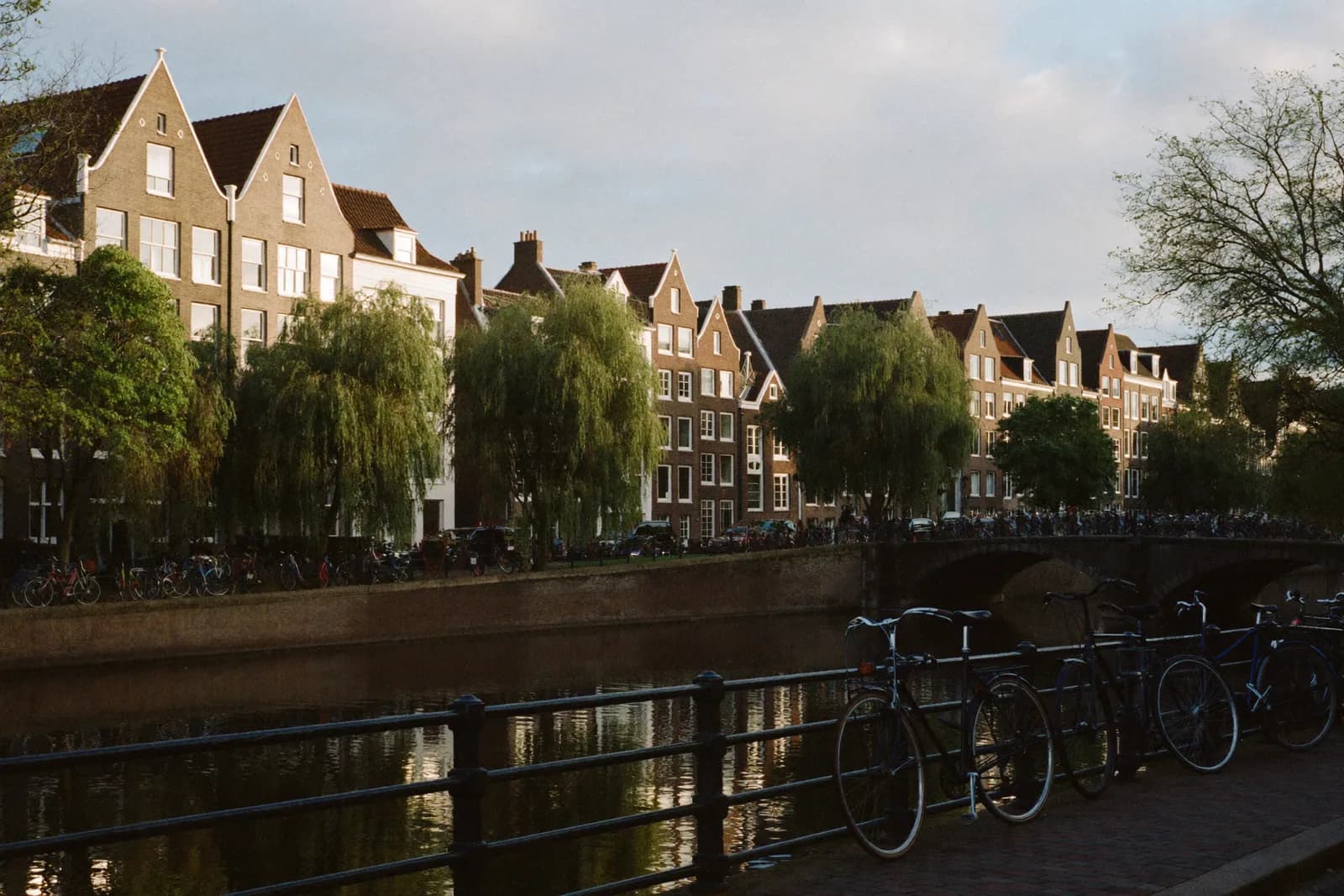
Study in the Netherlands
Explore a wide choice of English-taught degrees, interactive learning and practical study options in a compact, well-connected country.
The Netherlands may suit you if…
- You want a wide choice of English-taught degrees in continental Europe.
- You enjoy seminars, group projects and problem-based learning.
- You would like to live in a compact, well-connected and cycling-oriented country.
- You are interested in subjects such as business, engineering, design or social sciences.
Advantages and trade-offs
The Netherlands offers several compelling study options, but it is important to understand the practical challenges before choosing a programme.
Advantages
- A wide range of English-taught programmes.
- Interactive, student-centred teaching that encourages teamwork and practical problem-solving.
- Relatively affordable statutory tuition for eligible EU/EEA/Swiss students.
- Excellent public transport and easy connections between cities.
- Professionally focused programmes at universities of applied sciences, often incorporating practical projects and internships.
Trade-offs
- A severe student housing shortage, particularly in popular university cities.
- Early application deadlines and selection procedures for programmes with limited places (numerus fixus).
- A teaching style that expects active participation and independent study.
- Grey, wet weather for much of the year.
What you can study
Dutch higher education includes research universities (WO), universities of applied sciences (HBO), university colleges and institutes for international education. Research universities are primarily academic and research-oriented, while universities of applied sciences emphasise professional and practical learning.
- Bachelor's degrees at research universities (WO).
- Bachelor's degrees at universities of applied sciences (HBO).
- Master's degrees.
- PhD and doctoral research.
- Preparatory, foundation and pathway programmes at selected institutions.
- English-language preparation at selected institutions.
Popular subjects
- Business and international management
- Engineering and technology
- Psychology
- Design and creative industries
- Life sciences
- Agriculture and food science
- International relations
Getting in
General entry requirements
The Netherlands distinguishes between research universities (WO) and universities of applied sciences (HBO). Entry requirements vary by institution and programme. Research universities generally place more emphasis on academic preparation, while universities of applied sciences focus on professional and practical education.
International qualifications are assessed against the institution's admission criteria. Institutions may use Nuffic guidance when evaluating foreign diplomas. Some programmes use the numerus fixus system, which limits the number of available places and involves a selection process.
Language requirements
For English-taught programmes, you will generally need to demonstrate English proficiency. Institutions may accept recognised tests such as IELTS, TOEFL iBT, Cambridge English, PTE Academic or LanguageCert. Some may accept previous education taught in English instead of a test. Accepted evidence and minimum scores vary by institution and programme.
Typical intakes
The main intake is generally September, with a smaller February intake at some institutions and for some programmes. Certain institutions offer additional start dates. For example, Wittenborg University of Applied Sciences has multiple entry points throughout the academic year.
When each stage happens
These are indicative steps counted back from your intended start date. Exact deadlines and procedures depend on the institution and programme.
Around 12 months before
Research programmes, check entry requirements and identify any numerus fixus courses or earlier application deadlines.
Around 9–10 months before
Prepare your academic documents, check English-language requirements and take a recognised test if needed.
Key application deadlines: 15 January and 1 May
The general deadline for numerus fixus programmes is 15 January. For other programmes, the general Studielink deadline is 1 May. Some institutions and programmes set different or earlier deadlines, especially for international applicants. Always check the deadline for your specific course.
Around 5–7 months before
Complete any selection steps, respond to offers and follow the institution's enrolment instructions.
Around 4–6 months before, or earlier
Start searching for accommodation as early as possible. Given the serious housing shortage, aim to secure housing before travelling to the Netherlands.
Around 3 months before
Follow your institution's instructions for any required residence permit and entry-visa procedure. Allow sufficient time for document checks and an IND decision.
What it costs, realistically
Tuition guidance
For the 2026–27 academic year, eligible EU/EEA/Swiss students may qualify for the Dutch statutory tuition fee of €2,694 per year.
For students who pay institutional tuition fees, costs vary by programme and institution. Average tuition for non-EU/EEA/Swiss students is approximately:
- Bachelor's programmes: €9,000–€20,000 per year.
- Master's programmes: €12,000–€30,000 per year.
Always confirm the exact tuition fee directly with the institution.
Living costs
Students in the Netherlands typically spend around €1,000–€1,500 per month on living costs. Accommodation is often the largest expense and varies considerably by city and housing type. A student room commonly costs approximately €450–€1,000 per month.
The Netherlands is experiencing a serious student housing shortage. Arrange accommodation as early as possible, ideally before travelling.
Scholarships
Scholarships may be available through research universities, universities of applied sciences and national schemes, including the NL Scholarship for eligible international students. Institution-specific awards may also be available.
Scholarships are competitive and often cover only part of the costs. Do not depend on scholarship funding until an award has been formally confirmed.
Tuition fees, living costs, entry requirements and deadlines are subject to change. Check the latest details with the relevant institution before making a decision.
Last reviewed: 7 September 2026
Visa process overview
EU/EEA and Swiss citizens generally do not need a Dutch residence permit to study in the Netherlands. Students from outside the EU/EEA/Switzerland generally require a student residence permit, and some nationalities also need a provisional residence visa (MVV).
For higher education, the university or university of applied sciences must be a recognised sponsor of the Dutch Immigration and Naturalisation Service (IND). The institution normally submits the residence application on the student's behalf.
Student residence permit
To qualify, students generally need to:
- Be enrolled in a full-time, accredited programme.
- Study at an institution recognised by the IND as a sponsor.
- Meet the financial requirements.
- Maintain sufficient academic progress throughout their studies.
For 2026, the IND financial study norm for higher education is €1,130.77 per month, excluding tuition fees. Students must normally demonstrate access to sufficient funds for 12 months.
Students must also generally achieve at least 50% of the credits available each academic year to continue meeting the residence permit conditions. The institution assesses academic progress and reports to the IND where required.
Health insurance is required, but the appropriate type depends on the student's circumstances, including whether they work while studying. Check the applicable requirements before arrival.
Work and post-study options
Working while studying
Non-EU/EEA/Swiss students holding a Dutch student residence permit may work as employees if their employer obtains a TWV work permit. They must choose between:
- Working up to 16 hours per week, or
- Working full-time during June, July and August.
Different rules apply to self-employment and internships. Students should check the IND's guidance before accepting work.
Post-study work: Orientation Year (zoekjaar)
Eligible graduates may apply for the Orientation Year residence permit after graduation. Students who complete an accredited bachelor's or master's degree at a Dutch higher-education institution can generally apply within three years of graduating.
The Orientation Year permit:
- Is valid for one year.
- Allows graduates to look for employment or establish a business.
- Allows the holder to work freely without a TWV.
- Cannot normally be extended.
Graduates who secure suitable employment may be eligible to switch to another residence route, such as a highly skilled migrant, start-up or self-employed residence permit.
Immigration rules, financial requirements and eligibility conditions can change. This is general information, not individual immigration advice. Always confirm the latest rules with the Dutch IND and your educational institution before making decisions.
Popular cities
Amsterdam
Wide choice of universities and programmes, with particularly strong housing pressure and high living costs.
Rotterdam
Modern international port city with strong options in business, economics and related subjects.
Utrecht
Central, well-connected student city with significant demand for accommodation.
Eindhoven
Strong technology and design focus, with close links to the region's technology sector.
Groningen
Northern university city with a large student population and a compact, student-focused atmosphere.
Delft
Compact university city particularly well known for engineering and technology.
Selected institutions and education providers
The Netherlands offers a wide range of research universities and universities of applied sciences. Study With FM works with selected institutions, including:
Wittenborg University of Applied Sciences
An international university of applied sciences with its main campus in Apeldoorn and a study location in Amsterdam. Wittenborg offers English-taught programmes in business, management, entrepreneurship and related disciplines.
Students can also explore other Dutch institutions according to their chosen course, academic background and individual circumstances.
Institution partnerships and programme availability may change. Inclusion does not guarantee admission. Confirm current options with Study With FM.
Studying in the Netherlands: FAQs
Official sources and further information
- IND — Dutch Immigration and Naturalisation Service: study, work and the Orientation Year
- Study in NL — admissions, tuition, housing and scholarships
- Nuffic — Dutch education system and international qualifications
- Studielink — applications and enrolment
- Government.nl — official information about the Netherlands
Content owner: Temitope Shobowale (Sarah), Student Advisor
Reviewed by: Mahin Shafiei, Director & Special Case Advisor
Last reviewed: 7 September 2026
Check if the Netherlands fits your profile
Tell us your grades, budget and intended start date. We'll help you assess whether studying in the Netherlands is realistic for you — and explore other options if it isn't.