
Study in the United States
The United States offers one of the world's broadest higher-education landscapes, with thousands of institutions, flexible undergraduate study, major research universities, specialist colleges and a distinctive campus experience. There is enormous choice, but applications, costs and immigration rules vary significantly between institutions and individual students.
Is the United States right for you?
The United States may suit you if:
- You want to explore different subjects before fully specialising in your undergraduate major.
- You are interested in universities that consider extracurricular activities, leadership and wider achievements alongside academic performance.
- You enjoy the idea of a strong campus culture, with societies, sport, research and university events.
- You want a wide choice of universities, colleges and specialist institutions.
- You would like to study near industries such as technology, finance, entertainment, healthcare or research.
- You can plan financially for a Bachelor's degree that typically takes around four years.
EducationUSA recommends starting your university search at least 12–18 months before enrolment, allowing time to compare institutions, prepare applications and investigate funding.
Advantages and trade-offs
Advantages
- An extensive range of institutions and courses.
- A flexible undergraduate structure at many universities.
- A strong campus and extracurricular culture.
- Research opportunities across many disciplines.
- Community college routes that may lead into a Bachelor's degree.
- Merit scholarships or institutional financial aid at some universities.
- Study settings ranging from major cities and traditional college towns to suburban and nature-focused campuses.
Trade-offs
- A typical four-year Bachelor's degree may cost more overall than a shorter degree elsewhere.
- Application systems, deadlines and requirements differ between institutions.
- Selective admissions can involve essays, recommendations, activities and other evidence beyond grades.
- Tuition and living costs can be high, particularly in major cities.
- Health insurance is commonly required by universities and may be a significant additional expense.
- Student visa restrictions, regulated employment and uncertain post-study options require careful planning.
What can you study?
- High school and boarding school
- Community college and Associate degrees
- Bachelor's degrees
- Master's degrees
- MBA and professional programmes
- PhD and doctoral study
- Intensive English programmes
- Selected pathway and short-term programmes
Popular subjects
- Computer Science and Artificial Intelligence
- Business and Finance
- Engineering
- Health Sciences
- Economics
- Psychology
- Media and Communications
- Film and Performing Arts
- Data Science
- Law and pre-law pathways
- Biological Sciences
- Design and Creative Industries
Course availability, entry routes and requirements depend on the institution.
Entry requirements
Undergraduate applications
Requirements vary significantly between institutions. Universities may consider school transcripts, application essays, recommendations, extracurricular activities and SAT or ACT scores where required. Some universities remain test-optional, while others require or have reintroduced standardised testing. Check the policy for your exact university and entry year.
Postgraduate applications
Applicants normally need an appropriate Bachelor's degree. Depending on the programme, they may also need GRE or GMAT results, a portfolio, relevant professional experience, an interview or subject-specific prerequisites.
English-language requirements
International applicants whose previous education does not meet an institution's English-language exemption criteria may need to demonstrate English proficiency. TOEFL and IELTS are commonly accepted, and some institutions accept other recognised assessments. Minimum scores vary by programme and study level. Some institutions offer conditional admission or an English-language programme before the main degree.
Always confirm the institution's latest requirements directly.
When can you start?
August / September — Fall intake
The main intake, generally offering the widest selection of programmes.
January — Spring intake
Available at many universities, although course choice may be more limited than in Fall.
May / June and other summer dates
Selected universities and programmes offer summer starts. Availability and deadlines vary.
Your application timeline
12–18 months before your start date
Research institutions, locations, study costs and entry requirements. Plan any required tests and explore scholarships.
9–12 months before
Prepare applications, essays, recommendations and funding applications. Many undergraduate deadlines for a Fall start fall between November and January, but they vary considerably. Early Decision and Early Action deadlines may be earlier.
5–8 months before
Review admission decisions, scholarship offers and financial-aid packages. Compare the full cost of each option.
4–5 months before
Choose your institution, complete enrolment steps and request the documents needed for the applicable student visa process, if you are eligible.
Before travel
Confirm visa eligibility and requirements, then arrange any applicable visa application, accommodation, insurance, travel and university pre-arrival tasks.
Tuition and living costs
Undergraduate tuition and fees
For the 2025–26 academic year, College Board reported average published tuition and fees of approximately:
- $31,880 per year for out-of-state undergraduates at public four-year universities.
- $45,000 per year at private nonprofit four-year universities.
These are sector-wide averages, not quotes for international students. Individual universities may charge substantially less or more. Community colleges can offer a lower-cost starting point; specialist, private and highly selective institutions may cost considerably more.
Living costs
Location makes a major difference. New York City, Boston, San Francisco and Los Angeles can be expensive, while smaller cities, suburban campuses and parts of the Midwest and South may offer lower living costs.
Plan for:
- Accommodation and utilities
- Food
- Health insurance
- Books and study materials
- Local transport
- Flights
- Personal expenses
- Applicable visa and SEVIS fees
- An emergency fund
Ask each institution for its full estimated annual cost of attendance, including compulsory fees and insurance, before making a decision.
Scholarships and financial aid
Funding for international students varies widely. Some universities offer merit scholarships based on academic achievement or other strengths; a smaller number offer need-based institutional aid to eligible international applicants. Athletic scholarships may also be available through qualifying institutions and sports.
Scholarship deadlines may coincide with or precede admission deadlines. Research funding early, and do not assume international applicants are eligible for the same government financial aid as U.S. students.
F-1 student visa: what to know
For academic study, the most common student visa category is F-1. The usual process begins with acceptance by a Student and Exchange Visitor Program (SEVP)-certified institution. The institution registers the student in SEVIS and issues Form I-20. An applicant generally completes Form DS-160, pays applicable fees and attends an interview at a U.S. embassy or consulate. Applicants may need to demonstrate their academic preparation, financial resources and eligibility.
The published F-1 visa application fee is $185, and the I-901 SEVIS fee for F students is $350. Other charges may apply depending on circumstances and nationality. New F-1 visas may be issued up to 365 days before a programme begins, but new students normally cannot enter the United States more than 30 days before the start date.
Nationality-related visa restrictions
Under restrictions effective 1 January 2026:
- Iranian nationals: Visa issuance is fully suspended for affected nationals across immigrant and nonimmigrant categories, subject to limited exceptions.
- Nigerian nationals: Issuance of F, M and J student and exchange visas is partially suspended for affected nationals, subject to limited exceptions.
The rules include exemptions for some dual nationals applying with an unaffected passport, and the proclamation does not apply to certain people who held a valid visa on its effective date. An individual may still be able to submit an application even when visa issuance is restricted; submitting an application does not mean a visa can be issued.
Visa applicants should check the current restrictions and exceptions before committing funds.
Interviews and online-presence checks
U.S. Department of State instructions generally direct nonimmigrant visa applicants to arrange interviews in their country of nationality or residence, with designated processing locations for countries without routine visa services. Applicants for F, M and J visas are subject to online-presence review and are instructed to set social-media profiles to public or open for vetting.
Official requirements can change quickly. These details are general information, not personalised immigration advice. Verify your position with the U.S. Department of State or an appropriately qualified immigration professional.
Working during and after your studies
Working while studying
F-1 students may be able to take qualifying on-campus employment. Off-campus work generally requires specific authorisation or must qualify under an approved practical-training route such as Curricular Practical Training (CPT) or Optional Practical Training (OPT). Always check your individual work authorisation with your university's Designated School Official (DSO) before starting a job.
Post-study work: Optional Practical Training (OPT)
Eligible F-1 students may apply for temporary employment authorisation directly related to their major field of study. Post-completion OPT may provide up to 12 months of authorisation. Graduates with qualifying Science, Technology, Engineering or Mathematics (STEM) degrees may be eligible for a further 24-month STEM OPT extension, potentially bringing the total to up to 36 months.
The STEM extension has additional degree, employer and training requirements. Approval is not automatic, and eligibility, fees and rules may change. Do not rely on OPT as a guaranteed route to employment.
Longer-term employment
Some graduates may qualify for a different employment-based immigration category, such as H-1B for eligible specialty occupations sponsored by a qualifying employer. H-1B is not an automatic continuation of OPT. Many first-time petitions are subject to an annual cap and selection process, although some employers and roles are cap-exempt.
A U.S. degree does not guarantee employment, longer-term work authorisation or immigration status after graduation.
One country, very different student experiences
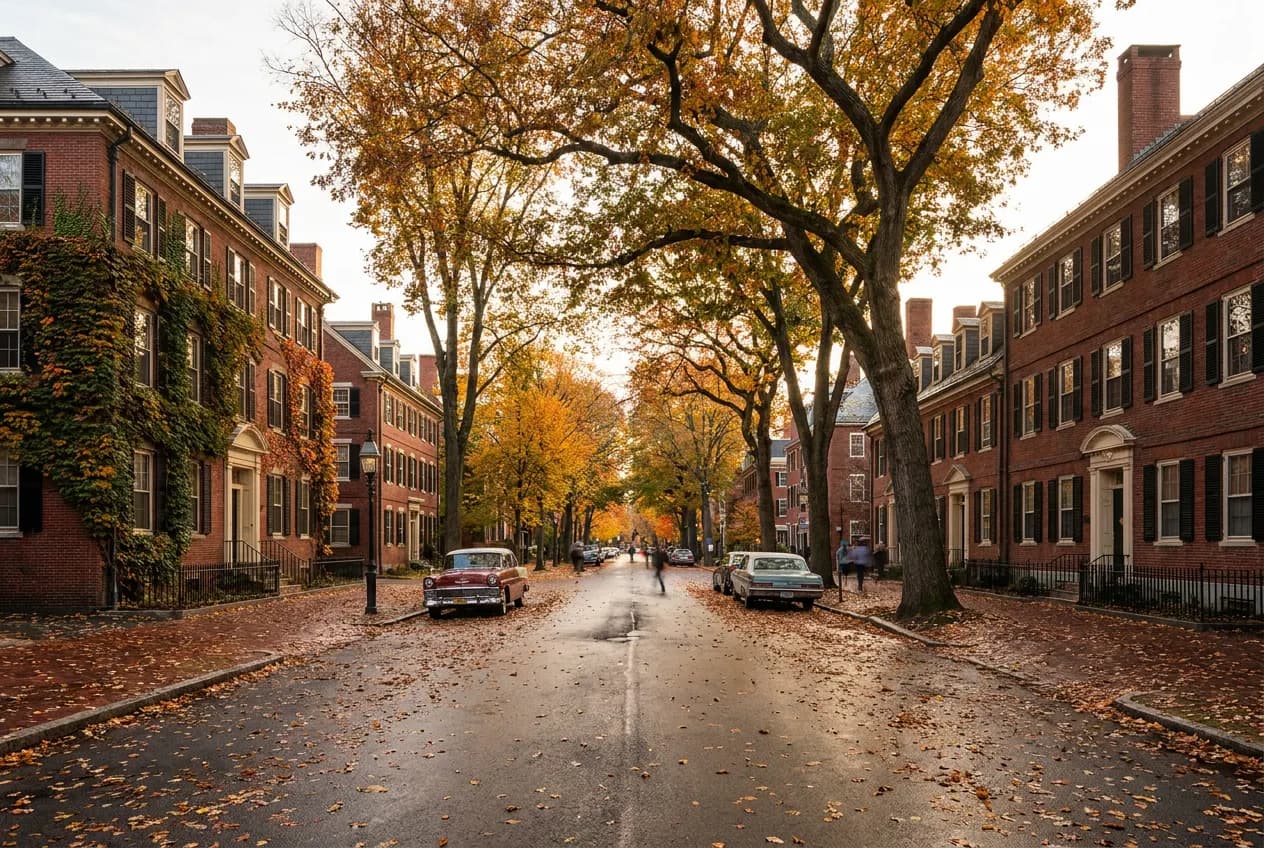
You could study in central New York, on a traditional residential campus in a college town, near California's beaches or within reach of the Rocky Mountains. The United States offers very different environments, as well as access to major centres for technology, finance, healthcare, research and entertainment.
For many students, university life extends beyond lectures: student organisations, campus sport, residence halls, research projects, newspapers, performances and long-standing traditions can be part of the experience.
More than the classroom
Depending on your location and interests, you could explore professional or college sport, Broadway, museums, beaches, national parks, hiking and skiing in Colorado, film and music in Los Angeles, Silicon Valley's technology scene, jazz and food in New Orleans, live music in Nashville or Austin, and concerts and festivals across the country.
Find your U.S. city
New York City
Best for: Finance, business, media, fashion, the arts and big-city life.
Study amid world-famous cultural institutions, international communities and industries ranging from finance to design and entertainment.
Highlights: Broadway · Central Park · museums · finance · fashion · food · sport · nightlife
Boston
Best for: Universities, research, biotechnology and healthcare.
Boston and neighbouring Cambridge have a major concentration of universities, hospitals and research organisations, with a strong student identity and a more compact feel than New York.
Highlights: University culture · research · healthcare · history · sport · walkable neighbourhoods
Los Angeles
Best for: Film, media, design, entertainment and a Southern California lifestyle.
LA combines major universities with creative industries, diverse neighbourhoods and access to the Pacific coast.
Highlights: Hollywood · beaches · film · music · design · food · sunshine
San Francisco Bay Area
Best for: Technology, entrepreneurship and innovation.
Study close to Silicon Valley's technology and startup community, with access to San Francisco, coastal landscapes and nearby nature.
Highlights: Technology · startups · San Francisco · coastline · culture · nature
Chicago
Best for: Business, architecture, culture and big-city life.
Chicago offers major universities, striking architecture, Lake Michigan, professional sport, music and a different urban experience from the coastal hubs.
Highlights: Architecture · business · sport · food · music · lakefront
Washington, D.C.
Best for: Politics, international relations, law and public policy.
The U.S. capital is particularly appealing to students interested in government, diplomacy, public institutions and international affairs.
Highlights: Smithsonian museums · government · international organisations · history · politics
Seattle
Best for: Technology, business and access to nature.
A leading technology and business centre with mountains, water and the Pacific Northwest within easy reach.
Highlights: Technology · coffee culture · mountains · waterfront · music
Austin
Best for: Technology, live music and an energetic student environment.
Austin combines a growing technology sector, a large university community and one of the country's best-known live music scenes.
Highlights: Live music · technology · food · nightlife · university culture
Houston
Best for: Healthcare, energy, engineering and space-related industries.
Houston is a major centre for medicine and engineering, with a diverse population and a broad international food scene.
Highlights: Texas Medical Center · energy · Space Center Houston · international food
Fort Collins, Colorado
Best for: Outdoor life, engineering, sciences and a college-town atmosphere.
Fort Collins offers university life with access to the Rocky Mountains and opportunities for hiking, cycling and winter sports.
Highlights: Colorado State University · outdoor recreation · mountains · college-town life
Selected U.S. institutions
Examples of U.S. institutions Study With FM supports applications to include:
- Avila University — Kansas City, Missouri
- Colorado State University — Fort Collins, Colorado
Institution availability and the application route should be confirmed for your chosen programme and intake.
Frequently asked questions
Official sources and further information
- EducationUSA — studying in the United States
- U.S. Department of State — student visas
- U.S. Department of State — 2026 nationality-related visa restrictions
- U.S. Department of State — visa interview locations
- Study in the States — DHS / SEVP
- U.S. Citizenship and Immigration Services — USCIS
- College Board — Trends in College Pricing
Costs, entry requirements, scholarship terms, visa restrictions and work policies can change. Figures and processes on this page are general guidance; always verify current requirements with the institution and responsible authority before committing funds.
Content owner: Victory Ikpeama — Admissions Coordinator
Reviewed by: Mahin Shafiei — Founder & Director
Last reviewed: 7 September 2026
Explore your U.S. study options
Tell us about your qualifications, budget and preferred start date. We can help you explore suitable institutions and application routes, while you verify any nationality-specific visa restrictions before committing to a programme.