
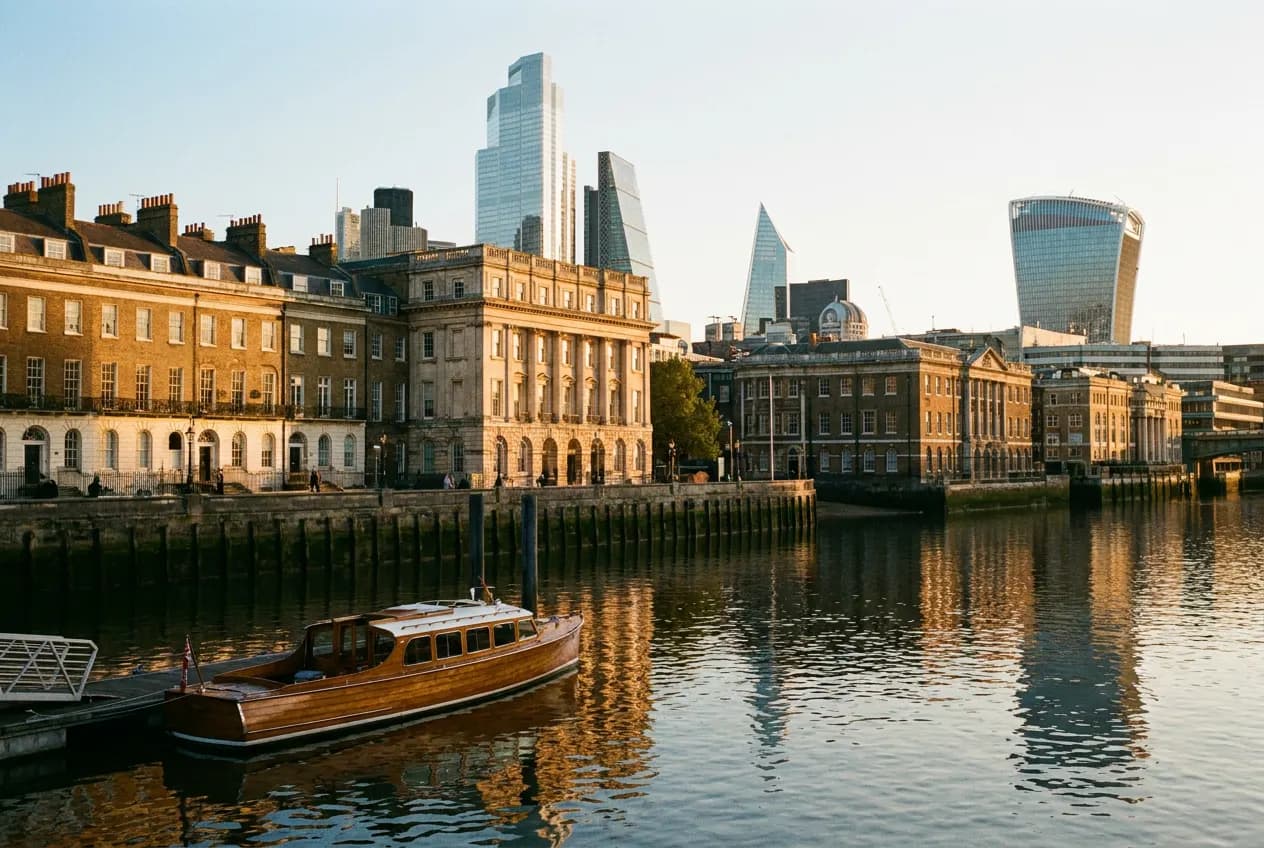
Study in the United Kingdom
From boarding schools and foundation programmes to bachelor's, master's and doctoral degrees, the UK offers a wide choice of study routes in an English-speaking environment. Explore your options across England, Scotland, Wales and Northern Ireland, and find a course, institution and city that fit your goals and budget.
Is the UK right for you?
The United Kingdom may be a strong option if you:
- Want a broad choice of universities, schools, colleges and specialist education providers.
- Are considering a foundation programme, International Year One or pre-master's route before further study.
- Want to study at undergraduate, postgraduate or doctoral level in English.
- Value a choice of subjects, locations and campus environments.
- Are interested in a one-year taught master's programme, which is common at UK universities.
Advantages
- Many undergraduate degrees take three years in England, Wales and Northern Ireland; four years is common in Scotland. Many taught master's degrees take one year.
- Most full-time undergraduate applications are handled through UCAS, making it easier to compare courses and application requirements.
- Students can choose from established boarding-school, sixth-form, university and specialist pathways.
- Many degree programmes offer subject specialisation from an early stage.
- University towns and major cities offer active, international student communities.
Things to consider
- Tuition fees and everyday expenses can be substantial, especially in London.
- Entry standards, course structures and availability differ between institutions.
- Scholarships can be competitive and should not be assumed when planning your finances.
- Student visa, dependant and post-study work rules can change. Always check the latest official guidance.
Study levels and pathways
Study With FM supports students exploring:
- Schools and boarding schools
- GCSE and A-Level programmes
- Foundation and pathway programmes
- International Year One programmes
- Undergraduate degrees
- Pre-master's programmes
- Master's degrees
- MBA and professional programmes
- PhD and doctoral study
- Short courses and selected specialist programmes
Popular subjects
UK institutions offer courses across a wide range of disciplines, including:
- Business and Management
- Finance and Accounting
- Economics
- Engineering
- Computer Science and Technology
- Artificial Intelligence and Data Science
- Law
- Psychology
- Education
- Medicine and Health-related subjects
- Architecture
- Art and Design
- Media and Communications
- Hospitality and Tourism
- Social Sciences
- Humanities
- Sciences
Course availability and entry requirements vary by institution and programme.
Entry and English-language requirements
What institutions look for
Requirements depend on the qualification level, institution and individual course. Applications may be assessed using:
- Previous qualifications and academic grades
- Subject-specific prerequisites
- English-language ability
- A personal statement or UCAS application responses, where applicable
- Academic or professional references
- A portfolio or audition for certain creative courses
- An interview or admissions test for selected programmes
- Relevant academic or professional experience for some postgraduate courses
Institutions assess international qualifications against their own admission criteria. Study With FM can help you compare those criteria with your academic background and shortlist realistic study options.
English-language requirements
Universities commonly accept IELTS Academic and may recognise other English-language qualifications or assessment methods. Each course sets its own requirements.
For Student visa purposes, the usual minimum is CEFR B2 for degree-level study or above and CEFR B1 for study below degree level, unless an exemption or another permitted way of meeting the requirement applies. An eligible higher education provider may assess English ability itself for degree-level study. Check both the institution's entry requirements and the official Student visa English rules.
Intakes and application dates
Common intakes
- September/October: The main intake, with the widest range of undergraduate and postgraduate programmes.
- January/February: A common alternative for selected master's, foundation and pre-master's programmes.
- May/June: A smaller intake, mainly for selected pathway, foundation and postgraduate programmes.
Intake availability varies by course and university. Not every programme offers multiple start dates.
Key UCAS dates for 2027 entry
- 15 October 2026, 18:00 UK time: Equal-consideration deadline for Oxford, Cambridge and most medicine, dentistry and veterinary medicine/science courses.
- 13 January 2027, 18:00 UK time: Equal-consideration deadline for most other undergraduate courses.
- 30 June 2027, 18:00 UK time: Applications received by this point are sent to universities and colleges; applications received afterwards normally enter Clearing.
Applications after an equal-consideration deadline may still be considered where places remain, but equal consideration is not guaranteed. Some courses and providers have different dates. Check the latest UCAS dates and deadlines for your course.
A typical application timeline
- 12–18 months before your course: Research courses and institutions, review entry requirements, plan your budget and arrange English testing if needed.
- 9–12 months before: Prepare and submit applications in line with the actual deadlines, including earlier UCAS deadlines for certain courses.
- 6–9 months before: Compare offers, meet conditions and decide where you want to study.
- 3–6 months before: Finalise outstanding admission requirements, arrange any deposit, prepare for your Confirmation of Acceptance for Studies (CAS) and check the official visa process.
- 2–3 months before: If you need a visa, allow time for the application, decision and accommodation arrangements. Student visa applications can generally be made up to six months before a course starts from outside the UK, or three months beforehand from inside the UK.
- Final weeks: Confirm travel, accommodation, arrival details and pre-departure arrangements.
These are planning stages, not fixed application deadlines.
Postgraduate applications: Most are made directly to the university. Deadlines vary; some courses close when places are filled. Early applications are especially helpful when scholarships, accommodation or visa processing are involved.
Foundation and pathway applications: Deadlines depend on the provider and intake. Some programmes offer several entry points during the year.
Tuition fees, living costs and scholarships
Tuition fees
As an indicative guide, many international programmes cost approximately £12,000–£25,000+ per year, depending on the institution and course. Specialist and professional programmes may cost considerably more. Boarding-school charges are often quoted by term and depend on whether accommodation is included. Always check the provider's current fees and any additional charges.
Living costs and Student visa maintenance
Where the Student visa maintenance requirement applies, the published figures are:
- London: £1,529 per month, for up to nine months.
- Outside London: £1,171 per month, for up to nine months.
These amounts are visa financial-evidence requirements, not estimates or guarantees of actual living costs. Your personal budget should separately cover accommodation, food, transport, course materials, phone and data, personal spending, travel and emergencies.
For applicants who must evidence funds held in an account, the general rule requires the relevant money to be held for at least 28 consecutive days, with the end of that period falling within 31 days before the visa application. Exemptions and alternative forms of evidence may apply. Refer to GOV.UK's Student visa financial requirements for the current rules.
Scholarships and funding
Potential funding routes include university international scholarships, merit awards, nationality-specific funding, GREAT Scholarships, eligible Commonwealth Scholarship programmes, faculty awards and tuition-fee reductions.
Scholarships depend on the course, university, nationality, academic record and funding cycle. For example, GREAT Scholarships are available only to students from eligible countries at participating universities. Check each provider's criteria and deadlines, and plan a budget that does not depend on receiving a competitive award.
Student visas and working in the UK
Student visa overview
Eligible international students studying with a licensed education provider may need a UK Student visa. Requirements typically include a Confirmation of Acceptance for Studies (CAS), an appropriate passport or identity document, sufficient funds and evidence of English ability. Depending on the applicant and course, other requirements may include tuberculosis testing, Academic Technology Approval Scheme (ATAS) clearance and additional documentation. Some school-age students may need a Child Student visa instead.
As recorded at the 2 September 2026 editorial review, the published Student visa application fee was £558 for both applications from outside the UK and eligible extensions or switches from within the UK. Applicants normally also pay an Immigration Health Surcharge, calculated according to their visa circumstances and duration. Check GOV.UK's Student visa guidance for current fees, eligibility, dependants and conditions.
Can you work while studying?
Some Student visa holders may work during their studies, but the permissions and limits depend on the course, sponsor and immigration conditions. Work restrictions can apply during term time and to particular types of employment. Check the conditions of your own visa before accepting work.
Staying after graduation
Eligible graduates who successfully complete an approved course may be able to apply for the unsponsored Graduate visa, allowing them to work or look for work without an employer sponsor:
- Applications made on or before 31 December 2026: Usually 2 years for eligible non-doctoral graduates.
- Applications made on or after 1 January 2027: Usually 18 months for eligible non-doctoral graduates.
- PhD and other eligible doctoral graduates: 3 years.
Eligibility and application timing matter. The Graduate visa cannot be extended, although other immigration routes may be available. See the official Graduate visa guidance.
Immigration decisions are made by the relevant UK authorities. This page provides general information, not advice on an individual immigration application. Requirements can change, so use official sources before making visa-dependent plans.
Life beyond the classroom
Four countries, many student experiences
England, Scotland, Wales and Northern Ireland each offer a different mix of cities, university towns, coastal locations and countryside campuses. You might prefer the pace of London, the music and football culture of Manchester, Edinburgh's historic streets or a quieter campus closer to nature.
International communities and student life
UK universities and colleges bring together students from many countries. More than 300 languages are spoken in London, reflecting its international communities. Outside lectures, university societies, sport, volunteering and cultural groups provide ways to meet people and settle in.
Culture, travel and weekends
Depending on your location and interests, student life can include football, live music, festivals, West End theatre, museums, galleries, food markets and restaurants from around the world. There are also castles and historic towns, coastal trips to places such as Brighton or Cornwall, and opportunities to explore national parks and the Scottish Highlands.
Many museums and galleries offer free general admission, while student discounts may be available for travel, attractions and events. Rail and coach connections can make weekend trips possible, although prices and journey times vary.
Find your UK city
The UK isn't just London. The right choice depends on your course, budget, preferred lifestyle and the type of student community you want. These cities provide different starting points for your shortlist.
London
Best for: Big-city life, networking, finance, business, technology, fashion and creative industries.
The capital brings together universities, employers, global communities and a wide range of cultural experiences. Neighbourhoods such as Camden, Greenwich, Shoreditch and the South Bank have distinct characters, while London's size and opportunities come with higher living costs.
Student-life highlights: West End theatre · museums · concerts · markets · international food · parks · football · nightlife.
Manchester
Best for: Music, football, business, technology and a lively student atmosphere.
Manchester is known for its music heritage, major football clubs and energetic student scene. The Northern Quarter and Ancoats offer independent cafés, restaurants, shops and nightlife.
Student-life highlights: Manchester United and Manchester City · live music · Northern Quarter · cafés · nightlife · shopping.
Birmingham
Best for: A major-city experience, central location, business and a diverse community.
Birmingham offers a broad mix of universities, shops, restaurants and entertainment. Its Midlands location also makes trips to other parts of England, including Stratford-upon-Avon and the Cotswolds, accessible.
Student-life highlights: Bullring · canals · food · music · nightlife · transport links.
Edinburgh
Best for: History, festivals, striking surroundings and traditional university life.
Scotland's capital blends historic architecture and Edinburgh Castle with cafés, student neighbourhoods and a major international festival scene. It may suit students who want a capital-city experience on a more compact scale than London.
Student-life highlights: Edinburgh Castle · Festival Fringe · Arthur's Seat · historic streets · cafés · nearby countryside.
Glasgow
Best for: Music, arts, nightlife and an active student community.
Glasgow offers a lively cultural scene, galleries, music venues, shopping and university life, with options for exploring Scotland's countryside beyond the city.
Student-life highlights: Live music · museums · restaurants · nightlife · shopping · outdoor trips.
Liverpool
Best for: Music, football, waterfront life and a strong student atmosphere.
Liverpool's waterfront, music history and football culture give it a distinctive identity. Its universities sit within a city known for live entertainment, museums and social life.
Student-life highlights: The Beatles · Liverpool FC and Everton · waterfront · museums · live music · nightlife.
Leeds
Best for: Student life, shopping, nightlife and access to Yorkshire.
Leeds combines a busy city centre and a large student community with connections to Yorkshire's historic towns and landscapes.
Student-life highlights: Shopping · restaurants · music · nightlife · student societies · Yorkshire countryside.
Bristol
Best for: Creativity, independent culture, music and a more relaxed urban feel.
Bristol is known for its harbour, street art, independent businesses and festivals. It also provides a base for exploring Bath and south-west England.
Student-life highlights: Harbourside · street art · independent cafés · live music · festivals · nearby countryside.
Sheffield
Best for: Students who want city facilities with nature close by.
Sheffield combines universities, music, independent cafés and sport with particularly good access to green space and the Peak District.
Student-life highlights: Student events · music · cafés · sport · parks · Peak District.
Other study locations across the four nations, including university towns and cities such as Cardiff and Belfast, may also be worth exploring. Study With FM helps you assess the course, institution and location together rather than choosing on city reputation alone.
Selected UK institutions
Study With FM's current institution records include:
- Birmingham City University
- London South Bank University
- University of Hertfordshire
- De Montfort University
- Edge Hill University
Frequently asked questions
Official sources and further information
- UK Student visa — GOV.UK
- Student visa financial evidence — GOV.UK
- Student visa English-language requirements — GOV.UK
- Graduate visa — GOV.UK
- UCAS application dates and deadlines
- GREAT Scholarships — British Council Study UK
Content owner: Victory Ikpeama — Admissions Coordinator
Senior reviewer: Mahin Shafiei — Founder & Director
Last reviewed: 2 September 2026
Next review: Before the next major UK admissions cycle, or sooner if immigration rules, visa fees, financial requirements or other material guidance changes.
Ready to explore your UK options?
Tell us about your qualifications, preferred course, budget and intended start date. We'll help you identify study routes and institutions worth considering, without promising admission, scholarships or visa outcomes.