
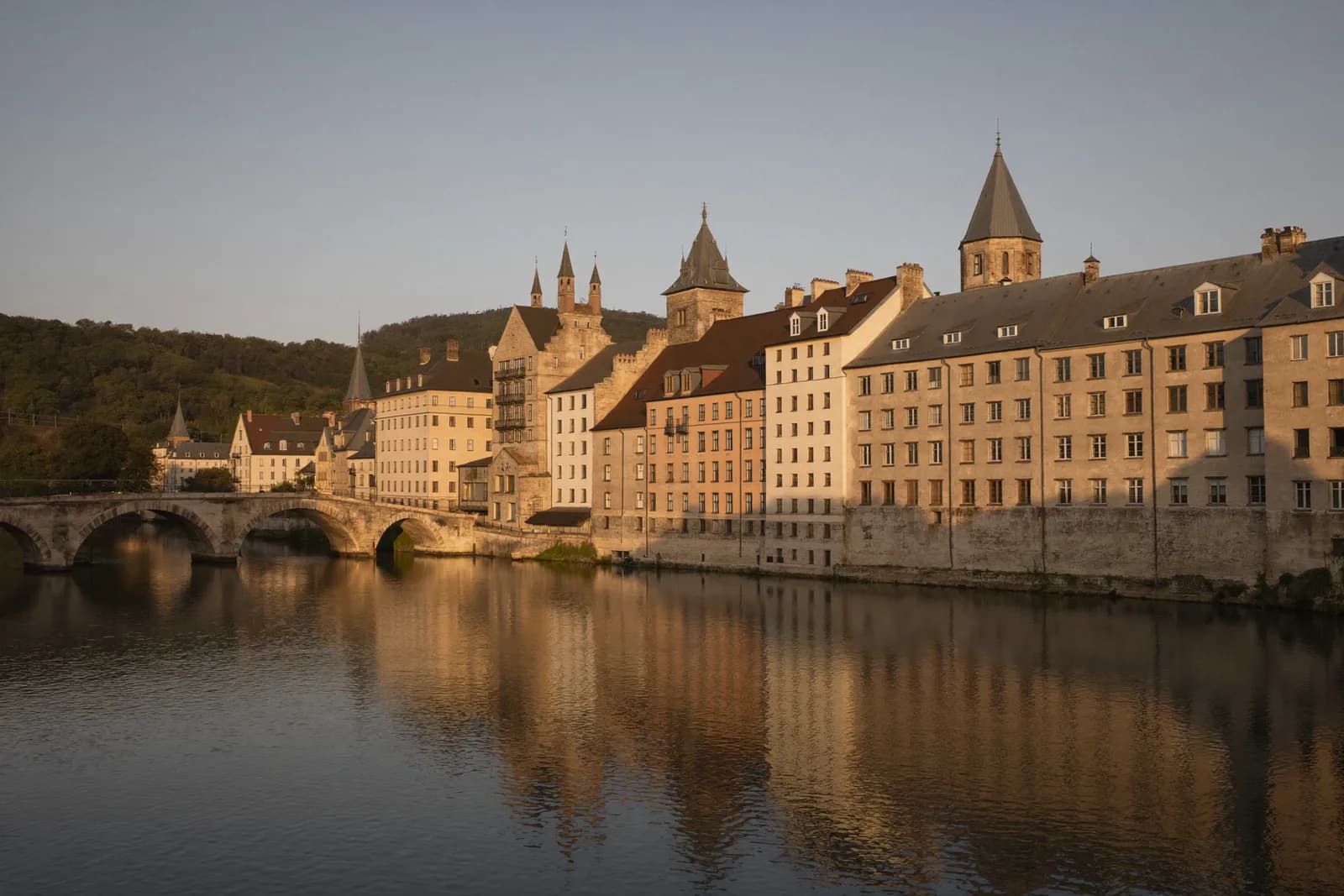
Study in Germany
Strong engineering and research traditions, with many public universities offering low or no tuition fees compared with other major study destinations. Germany combines internationally connected cities, established university towns and industry-focused education. The right option depends on your qualifications, preferred language of study, budget and long-term goals.
Germany may suit you if…
- You want a recognised degree and are interested in the comparatively low tuition available at many public universities.
- You are drawn to engineering, science, technology, business or applied research.
- You are willing to learn German or carefully research English-taught programmes.
- You value practical learning, industry connections and the choice between large cities and smaller university towns.
Advantages and trade-offs
Every study destination offers opportunities and compromises. Consider both before choosing a course.
Advantages
- Many public universities charge no tuition or relatively low tuition fees, including for international students, although important exceptions apply.
- Germany has a strong reputation in engineering, natural sciences, technology and applied research.
- Universities and universities of applied sciences can offer close connections with industry.
- English-taught programmes are available, especially at Master's level.
- Germany's central European location makes travel to neighbouring countries relatively convenient.
Trade-offs
- Many Bachelor's programmes are taught mainly or entirely in German.
- Entry can be competitive, with strict qualification and subject-specific requirements.
- Admissions, enrolment and residence procedures can involve extensive documentation.
- Housing can be difficult to secure, particularly in popular university cities.
- You must demonstrate sufficient funds for your studies, often through a blocked account, scholarship or another accepted form of financial evidence.
What you can study
- Studienkolleg preparatory programmes, where required for university entry
- Bachelor's degrees
- Master's degrees
- Doctoral degrees and research programmes
- Dual study programmes combining academic study with practical work, subject to eligibility
- German language courses
Popular subjects
- Mechanical and automotive engineering
- Electrical engineering
- Computer science and information technology
- Natural sciences
- Business and economics
- Architecture and design
- Media and creative industries
Entry and language requirements
General entry requirements
Undergraduate entry depends on whether your school-leaving qualification is recognised for direct admission to a German higher education institution. Some applicants may need to complete relevant university study first or attend a Studienkolleg preparatory programme and pass the Feststellungsprüfung assessment examination.
For Master's programmes, institutions normally assess the recognition and subject relevance of your Bachelor's degree, along with your grades and any specific modules or practical requirements. Doctoral entry and supervision arrangements vary by institution and research field.
Language requirements
English-taught programmes usually require evidence of English proficiency, although accepted tests and possible exemptions vary by institution. German-taught programmes commonly require an approved German-language qualification, such as TestDaF or DSH. Some programmes have requirements in both languages.
Typical intakes
The winter semester generally begins in October and is the main intake. A summer semester generally begins in April, but fewer programmes admit students then. Application deadlines vary significantly by institution, course and applicant category.
Application timeline
These are planning milestones, not fixed university or visa deadlines.
12–15 months before your intended start
Check whether your qualifications meet direct-entry requirements and whether a Studienkolleg or another preparatory route may be needed.
9–12 months before
Research courses and language requirements. Prepare to take relevant tests, and identify documents that may require certification or translation.
6–9 months before
Submit applications according to each institution's deadlines and application route, whether direct or through a service such as uni-assist.
4–6 months before
As admission decisions arrive, arrange the required financial evidence and begin the visa or residence process where applicable. Some applicants will need to start earlier.
2–3 months before
Prioritise accommodation, health insurance, travel and enrolment preparations. Housing searches in popular student cities may need to begin much earlier.
Tuition, living costs and scholarships
Tuition fees and semester contributions
At many German public universities, students pay a semester contribution rather than standard tuition fees. However, exceptions apply. Baden-Württemberg generally charges many students from outside the EU and EEA €1,500 per semester, subject to exemptions. Universities in Bavaria may also charge tuition to certain international students, while private institutions set their own fees. Tuition can apply to some specialised or continuing-education Master's programmes too.
A semester contribution is separate from tuition and supports services such as student representation and, in some cases, transport. Check the exact fees for your institution, programme, intake and fee status before applying.
Living costs
As a broad planning guide, DAAD estimates living expenses of approximately €900–€1,200 per month, depending on location and lifestyle. Munich, Frankfurt and Hamburg can be particularly expensive, especially for rent. Health insurance is generally mandatory, and accommodation deposits, travel, enrolment charges and initial setup costs also need to be budgeted for.
The official immigration proof-of-funds threshold is not necessarily enough to cover your actual living costs, particularly in a more expensive city.
Scholarships
DAAD, foundations and individual institutions offer scholarships and other funding opportunities. Availability, eligible nationalities, study levels and application requirements vary; some awards are more accessible to postgraduate and research applicants. Scholarships are competitive and should not be assumed in your initial budget.
Tuition fees, living costs, funding, admission criteria and application deadlines can change. Confirm the details directly with the institution and the relevant official authority before making financial commitments.
Student visa, working and post-study options
Student visa and residence
International students from outside the EU, EEA and Switzerland generally need appropriate immigration permission to study in Germany. For many nationalities, this means obtaining a student visa before travelling and then a residence permit for study. Citizens of certain countries can enter Germany without obtaining a student visa in advance and apply for the required residence permit after arrival.
Students normally need admission to a state-recognised higher education institution and must demonstrate that they can support themselves financially during their studies.
For 2026, the official financial benchmark for studying is €11,904 per year (€992 per month). Depending on the applicant's circumstances, acceptable evidence may include a blocked account, an eligible scholarship or a declaration of commitment. A blocked account is not universally required. Different financial thresholds may apply to other immigration routes, including seeking a place at university.
Working while studying
Eligible students from third countries can generally work up to 140 full days or 280 half-days per year. Alternatively, they can generally work up to 20 hours per week during the lecture period.
Different arrangements can apply to certain student-assistant roles. Always check the rules and any conditions attached to your residence status before taking employment.
Post-study work
After successfully completing a degree in Germany, eligible graduates from third countries may obtain a residence permit for up to 18 months to look for qualified employment.
During this job-search period, graduates may take up any type of lawful employment while looking for an appropriate qualified role. Once they secure eligible skilled employment, they may be able to switch to a skilled-worker residence permit or an EU Blue Card, depending on the applicable requirements.
Longer-term opportunities
Graduates who move into qualified employment may eventually become eligible for a settlement permit. For those who successfully complete higher education or vocational training in Germany, a facilitated route may be available after at least two years holding an eligible skilled-employment residence permit, 24 months of qualifying pension contributions, B1-level German and fulfilment of the other legal requirements.
Important: Studying in Germany does not guarantee a job, an EU Blue Card or permanent residence. Immigration eligibility depends on the rules in force when you apply and on your individual circumstances. This page provides general information, not personalised immigration advice. Confirm current rules with the German authorities.
Explore Germany
Germany offers an appealing mix of major international cities, historic university towns and smaller student centres. Its rail connections make it possible to discover different regions and visit neighbouring European countries, while local lifestyles and living costs can vary considerably.
Outside the classroom, you might explore Berlin's music and art scene, visit Hamburg's waterfront, experience football and festivals, or plan trips to the Black Forest, Bavarian Alps and North Sea or Baltic coast. The best city for you is the one that fits your course, interests and budget.
Popular cities
Berlin
Best for: Technology, startups, creative industries, culture and international city life.
Berlin combines universities and research institutions with a substantial technology, creative and entrepreneurial scene.
Highlights: Museums · music · nightlife · international food · startups · history · art · parks
Munich
Best for: Engineering, technology, business and access to nature.
Munich combines major employers and universities with easy access to Bavarian lakes and the Alps.
Highlights: Technology · engineering · Oktoberfest · museums · football · lakes · hiking and skiing trips
Hamburg
Best for: Logistics, media, business and waterfront city life.
Germany's major port city has a distinctive maritime character, canals, live music and established logistics and media industries.
Highlights: Harbour · Speicherstadt · concerts · waterfront · nightlife · international business
Frankfurt
Best for: Finance, business and international connections.
Frankfurt is one of Europe's major financial centres, with a notably international community and excellent transport connections.
Highlights: Banking · business · skyline · museums · international airport · European travel
Cologne
Best for: Media, culture and lively student life.
Cologne is known for its cathedral, media industry, large student community and lively calendar of cultural events.
Highlights: Cologne Cathedral · Rhine · carnival · media · music · museums
Stuttgart
Best for: Automotive, engineering and manufacturing.
Stuttgart has close links to Germany's automotive and engineering sectors, alongside green spaces and surrounding countryside.
Highlights: Automotive industry · technology · museums · parks · nearby countryside
Heidelberg
Best for: Traditional university life and a smaller, historic setting.
Heidelberg pairs an internationally recognised academic and research community with a picturesque old town on the Neckar River.
Highlights: Historic university · castle · old town · river · research
Aachen
Best for: Engineering and technology.
Aachen is particularly attractive to engineering-focused students and lies close to the borders with Belgium and the Netherlands.
Highlights: Engineering · Aachen Cathedral · historic centre · cross-border travel
Göttingen
Best for: Research and a classic university-town atmosphere.
In Göttingen, university life is a defining part of the city, creating a student-focused environment with a longstanding research tradition.
Highlights: Research · university culture · cafés · historic streets · cycling
Selected institutions and education providers
Germany offers public and private universities, universities of applied sciences and specialist education providers. Examples of institutions and providers Study With FM supports applications to include:
- Macromedia University of Applied Sciences: A state-recognised private university offering programmes in areas such as media, management, design and creative industries.
- Media University of Applied Sciences: A state-recognised private higher education institution with subjects including media, management, design and psychology, and locations in Berlin, Cologne and Frankfurt.
- SAE Institute Germany: A specialist education provider focused on creative media and technology, rather than a German university. Its current Bachelor's degree programmes are developed, delivered and assessed by SAE, with degrees awarded and quality-assured by the University of Hertfordshire.
- SRH University: A state-recognised private university offering courses in areas including business, engineering, computing, media, psychology, health and design at locations across Germany.
Frequently asked questions
Compare other destinations
Official sources and further information
- German Federal Foreign Office — visas and entry rules
- Make it in Germany — visa for studying
- Make it in Germany — settlement permits
- DAAD — costs of education and living
- DAAD — entry requirements
Content owner: Temitope Shobowale (Sarah), Student Advisor
Senior reviewer: Mahin Shafiei, Founder & Director
Last reviewed: 7 September 2026
Check if Germany fits your profile
Tell us about your grades, study interests, preferred language, budget and timing. We can help you explore suitable routes, understand the requirements and identify areas that may need more preparation.