
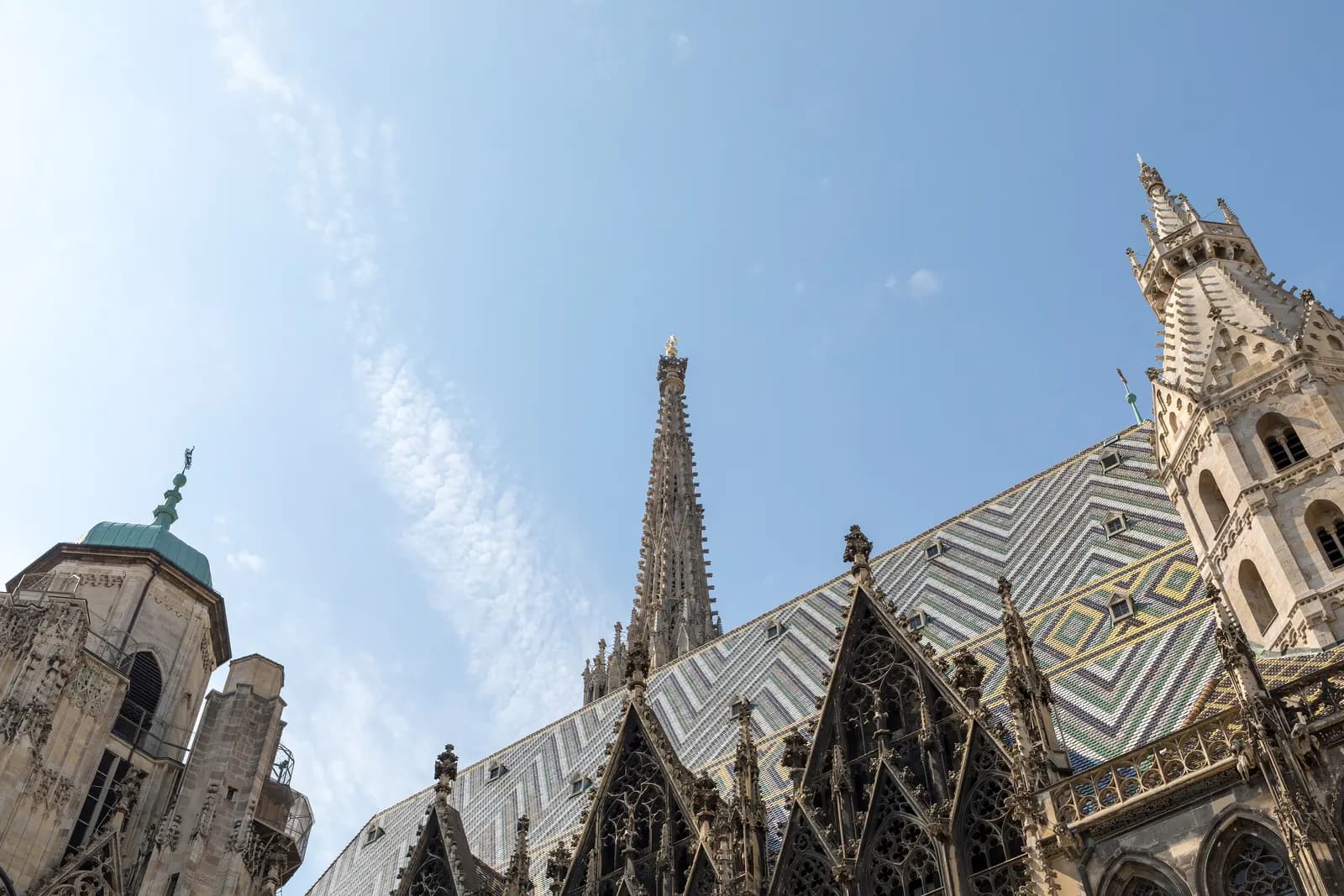
Study in Austria
Recognised European higher education, a choice between research-led universities and career-focused applied study, and comparatively moderate tuition fees at many public universities make Austria worth considering. From engineering and business to life sciences, music and the arts, Austria offers a wide range of degrees — but your programme language, entry route and living budget matter just as much as the institution you choose.
Austria may suit you if…
- You want a degree from a recognised European higher-education institution.
- You are comparing research-led universities with professionally oriented universities of applied sciences.
- You want to explore public-university options with comparatively moderate tuition fees.
- You are interested in engineering, computing, business, economics, sciences, medicine, humanities, music or the arts.
- You can meet the German-language requirements of your chosen course, or are looking for a programme taught entirely in English.
- You are considering a Master's or doctorate, where English-taught options are more widely available.
- You would enjoy living in Vienna, Graz, Innsbruck, Salzburg, Linz or a smaller university city.
- You want to understand the post-study options available to eligible international graduates, without assuming they are guaranteed.
Advantages and trade-offs
A good destination is one that fits your qualifications, finances and plans — not simply one with an appealing reputation.
Advantages
- A diverse higher-education system. Austria has 23 universities, 21 universities of applied sciences, 19 private universities and higher-education institutions, and 14 university colleges of teacher education. International students account for around 30% of its student population.
- Academic and applied routes. Universities of applied sciences (Fachhochschulen) provide career-focused degrees with practical training or internships. Around 640 degree programmes are offered across this sector.
- Extensive subject choice. The official Austrian programme database lists more than 2,500 degree programmes across more than 77 institutions.
- English-taught options. Approximately 580 programmes are listed as taught in English, particularly at postgraduate level.
- Relatively moderate tuition at many public universities. Most third-country students holding a Residence Permit – Student are generally charged €726.72 per semester in public-university tuition, plus a separate compulsory €26.20 student-union and accident-insurance contribution.
- A potential graduate route. Eligible third-country graduates may extend their student residence permit once for 12 months to look for work or establish a business, and may subsequently qualify for a Red-White-Red Card.
Things to consider
- German remains important. German-taught degrees commonly require B2 or C1 German, depending on the institution and programme. German can also matter for daily life and employment.
- English availability varies by degree. A university offering some modules in English does not mean its entire Bachelor's programme is English-taught.
- Deadlines may be early. Entrance examinations, international-document checks and programme-specific selection procedures can close well before general admission periods.
- Medicine is especially competitive. Public Human Medicine uses MedAT; applicants in the non-EU Human Medicine quota may receive a maximum of 5% of the available places.
- Living expenses need a separate budget. The official planning estimate is approximately €1,300 per month, which is much more than public-university tuition alone.
- Nationality affects residence rules. New British students generally follow third-country rules following Brexit, as do many other non-EU/EEA applicants.
What you can study
Austria participates in the European Higher Education Area and uses the European Credit Transfer and Accumulation System (ECTS).
- Bachelor's degrees: generally at least six semesters and 180–240 ECTS credits.
- Master's degrees: usually around two years following an appropriate Bachelor's degree; the ECTS structure varies by programme.
- Doctoral and PhD degrees: generally at least three years after an appropriate Master's or equivalent qualification.
- *Diploma programmes (Diplomstudien):* traditional programmes that remain in selected subjects, commonly lasting four to six years; medicine is an important example.
- *Universities of applied sciences (Fachhochschulen):* Bachelor's and Master's degrees with an applied, professionally oriented approach. Many have limited places and an entrance or selection procedure.
- *University Preparation Programmes (Vorstudienlehrgänge):* courses for applicants already admitted subject to supplementary examinations, not an automatic entry route for all international students.
Universities of applied sciences
These institutions often combine applied projects, employer cooperation and compulsory practical training. Some programmes are designed for students who are also working. Check the exact curriculum, placement arrangements, teaching language and admissions procedure before applying.
Popular subjects
- Business, management, economics, accounting and finance
- Computer science, artificial intelligence and data science
- Engineering, architecture and mathematics
- Natural sciences, biotechnology and life sciences
- Environmental science, sustainability, agriculture and food science
- Medicine, dentistry and health sciences
- Psychology, law, politics and international relations
- Humanities, languages, education and social sciences
- Media, communication, music, performing arts, fine arts and design
- Mining, metallurgy, materials science and resource engineering
Getting in
Bachelor's entry requirements
There is no single Austria-wide grade requirement for every international applicant. Decisions depend on your school-leaving qualification, country of education, chosen institution, subject, language and any entrance examination.
For public-university admission, non-EU/non-EEA applicants generally need a qualification equivalent to an Austrian university entrance qualification and evidence that it entitles them to enter the equivalent course in the country where it was issued. Relevant country-specific or subject-specific conditions may also apply.
You may need certified academic documents, legalisation or an apostille, certified translations, language evidence and programme-specific supporting materials. Always follow the receiving institution's instructions.
Master's and doctoral entry requirements
Master's applicants generally need an appropriate recognised Bachelor's qualification and sufficient relevant subject knowledge. Some courses specify prerequisite ECTS credits, interviews, portfolios or entrance assessments. Doctoral applicants ordinarily need a suitable Master's or equivalent qualification, a relevant research area and any faculty-specific requirements; a research proposal or potential supervisor may also be necessary.
Language requirements
German is the main teaching language at Austrian higher-education institutions. German-taught programmes frequently require B2 or C1, depending on the course.
English-taught programmes set their own requirements. Acceptable evidence may include IELTS Academic, TOEFL, Cambridge qualifications or previous education in English. There is no reliable single IELTS score for all of Austria. Check that your entire degree, rather than only selected modules, is taught in English.
University Preparation Programmes
Students who receive admission subject to supplementary examinations may be able to attend a Vorstudienlehrgang. Subjects can include German, English, mathematics and sciences. A university admission decision is required first. For a mainly German-taught degree, applicants normally need at least A2 German before joining the preparation programme's German course.
Medicine and dentistry: MedAT
The public Human Medicine and Dentistry admission route normally requires MedAT, a German-language entrance examination. Human Medicine is offered through the Medical Universities of Vienna, Graz and Innsbruck, and the Medical Faculty of Johannes Kepler University Linz; public Dentistry is available in Vienna, Graz and Innsbruck.
C1 German is required for first-time admission and continuation of medical studies. For Human Medicine only, candidates assigned to the non-EU quota may receive at most 5% of places; performance in MedAT still determines selection.
MedAT 2027 — dates currently marked as expected by the organisers
| Stage | Expected date or requirement |
|---|---|
| Online registration and fee payment | 1–31 March 2027 |
| Test day | 9 July 2027 |
| Test fee | €110 |
These dates are provisional. Confirm the final schedule and eligibility directly with MedAT before making arrangements.
Typical intakes and application deadlines
October is the main intake; the Winter Semester normally begins on 1 October. March is the second intake; the Summer Semester normally begins on 1 March. Not all programmes accept new students in both semesters.
For first admission to Bachelor's or Diploma programmes at public universities without special admission criteria, the general admission period closes on 5 September for the Winter Semester and 5 February for the Summer Semester. These are not universal international application deadlines. Programmes with selection procedures, non-EU document checks and universities of applied sciences can close much earlier.
Examples for the 2027 intake
| Institution and route | Published example |
|---|---|
| University of Vienna, Summer Semester 2027 | For eligible EU/EEA/Swiss applicants: 16 November 2026–5 February 2027; for non-EU/EEA applicants: 16 November 2026–7 January 2027. Some programmes have separate dates. |
| TU Wien, Summer Semester 2027 | Complete non-EU/EEA applications for Bachelor's, Master's and doctoral study must generally be submitted by 15 January 2027; entrance-procedure programmes have separate rules. |
| WU Vienna, English-taught Master's starting Autumn 2027 | Rolling applications opened 1 September 2026, with published priority deadlines including 8 January and 8 March 2027; individual programmes may close earlier. |
Always check the specific programme before relying on these examples.
When each stage happens
12–18 months before your intended start
Compare institutions and subjects, research German- and English-taught courses, check qualification equivalence, entrance tests, realistic costs and scholarships.
9–12 months before
Prepare language tests, transcripts, school or degree certificates, legalisation or apostilles, certified translations, references and any portfolio or research documents.
6–10 months before
Submit applications according to the actual programme deadlines. Register for entrance examinations, complete interviews or selection procedures and begin looking into accommodation.
After receiving an offer
Accept the offer as instructed, complete any supplementary requirements, prepare evidence of funds and accommodation, and review the applicable entry and residence process.
Around 3–6 months before travel
If you need a Residence Permit – Student, OeAD recommends applying at least three months before your planned entry, and preferably about six months in advance. Document legalisation and appointment availability may require an earlier start.
Before and after arrival
Confirm enrolment instructions, suitable health insurance, accommodation and original documentation. After moving into Austrian accommodation, most students must register their address within three working days.
What it costs, realistically
Public-university tuition and compulsory contributions
| Student category | General charge per semester |
|---|---|
| Austrian and EU/EEA students within the minimum study period plus two tolerance semesters | No tuition fee |
| Eligible Austrian and EU/EEA students after the tolerance period | €363.36 tuition |
| Most third-country students holding a Residence Permit – Student | €726.72 tuition |
| All students | Additional compulsory €26.20 ÖH student-union and accident-insurance contribution |
For most third-country students covered by the standard public-university rate, tuition plus the compulsory contribution totals €752.92 per semester. Waivers or exemptions may apply. Universities of applied sciences, private universities and other institutions have their own fee policies, so these public-university rates are not universal.
Living costs
Austria's official average student-budget estimate is approximately €1,300 per month. Indicative components include:
- Accommodation: around €450–€700 per month
- Food: around €300 per month
- Study, transport, personal and leisure expenses: around €500 per month
Costs depend on the city, housing and lifestyle; Vienna and other larger cities can be more expensive. This estimate is not the same as the minimum financial evidence required for a residence permit.
Scholarships
Use grants.at to search for funding by nationality, study level and subject, and check individual university opportunities. Full-degree scholarships are relatively rare. OeAD does not offer a general scholarship that funds an entire Bachelor's, Master's or PhD degree, so funding should not be assumed when preparing your budget.
Fees, budgets and funding opportunities may change. Confirm your programme's latest charges and conditions before committing.
Visa and residence overview
The appropriate entry or residence route depends on your nationality, length of study and existing immigration status.
EU/EEA and Swiss citizens
These students do not ordinarily need an entry visa. For stays longer than three months, those meeting the relevant conditions generally need a *Registration Certificate (Anmeldebescheinigung) within four months of arrival. The current application fee is €44*. This is separate from ordinary address registration.
British students
British nationals arriving after Brexit generally follow third-country rules unless they have protected rights from earlier residence. Qualifying short visits may be visa-free for up to 90 days in any 180-day period, but this does not itself permit ordinary employment or long-term degree study. British citizens may be able to submit a residence-permit application during lawful visa-free presence in Austria; applying does not extend the permitted 90-day stay.
Other third-country students
For study visits up to 90 days, a visa may or may not be required depending on nationality. For eligible stays of 91 days to six months, a Visa D may be appropriate; the published standard fee is €195 for applicants aged six or over and €97 for children under six, subject to exceptions. A Visa D does not automatically grant the same employment rights as a student residence permit.
For study lasting more than six months, third-country nationals generally need the *Residence Permit – Student (Aufenthaltsbewilligung – Student)*. First applications are usually submitted in person at the competent Austrian embassy or consulate. Some visa-exempt nationals can apply from within Austria during lawful entry, but cannot stay beyond their authorised period while waiting for a decision.
Residence Permit – Student: 2026 financial requirements
| Applicant or requirement | Published 2026 amount |
|---|---|
| Student under 24 | €722.58 per month |
| Student aged 24 or over | €1,308.39 per month |
| Couple | €2,064.12 per month for both |
| Each child | Additional €201.88 per month |
| Evidence period | Normally 12 months in advance |
| Accommodation adjustment | Additional resources if monthly accommodation costs exceed €386.43 |
| Residence-permit application fee | €218, payable on submission and non-refundable |
| Eligible ÖGK student self-insurance | €78.84 per month |
Applicants must also be able to cover required health insurance and may need to explain the origin of their funds. The financial thresholds above are immigration minimums, not recommended living budgets.
Documents, processing and renewal
A residence-permit application may require a passport, photograph, university admission, evidence of funding and its origin, accommodation, health insurance covering all risks in Austria, police clearance and correctly legalised or translated documents. The authority can request further evidence.
The normal decision period is 90 days, potentially extended by another 90 days if additional documents are required. Student residence permits are usually granted for 12 months, subject to the individual circumstances. For renewal, ordinary degree students generally need evidence of progress equivalent to 16 ECTS per academic year or eight semester hours; doctoral students may provide suitable supervisor confirmation.
Students generally need to register their Austrian address (Meldezettel) within three working days of moving in. Eligible student residence-permit holders can usually make short visits to other Schengen countries for up to 90 days within any 180-day period, subject to the applicable conditions.
Family and insurance
A spouse, registered partner or unmarried minor child may be eligible for a Residence Permit – Family Community. Spouses and registered partners must generally be at least 21 years old when applying. Family members do not automatically obtain unrestricted salaried-employment rights; an AMS permit and labour-market test will generally be required.
Students requiring a residence permit need appropriate health insurance covering all risks in Austria. Travel insurance may be suitable for initial entry but does not automatically satisfy the residence requirement. Eligible students may obtain Austrian ÖGK student self-insurance at the 2026 rate shown above.
Entry, work and residence rules are set by Austrian authorities and may change. This is general information, not individual immigration advice. Check the official requirements for your circumstances before applying.
Working while studying and after graduation
While studying
Third-country students holding a Residence Permit – Student generally need an *Employment Permit (Beschäftigungsbewilligung) for covered salaried work. The prospective employer applies to Austria's Public Employment Service (AMS) before work begins*.
For work of up to 20 hours per week, including marginal employment, the permit can generally be granted without a labour-market test. Work above 20 hours requires a labour-market test, and study must remain the primary purpose of residence. Some compulsory curriculum internships follow a separate AMS notification or confirmation procedure. Students on short-stay visas or visa-free visits should not assume these rules give them permission to work.
After graduation
Eligible third-country graduates can renew their student residence permit once for 12 months to search for suitable employment or start a business, provided they continue to meet the general residence conditions.
Graduates who secure a qualifying job appropriate to their education and meeting the applicable salary conditions may be eligible for an Austrian graduate Red-White-Red Card, without a points test or labour-market test under that category. After at least 21 months of qualifying employment during the preceding 24 months, a move to the Red-White-Red Card Plus may be possible. None of these stages grants permanent residence automatically.
Popular student cities
Vienna
Well suited to: business, economics, computing, medicine, law, humanities, science, music and the arts.
Austria's capital offers the broadest range of institutions, including the University of Vienna, TU Wien, WU Vienna, the Medical University of Vienna and BOKU University. Its extensive opportunities come with potentially higher accommodation costs.
Graz
Well suited to: engineering, science, medicine, humanities, business and applied study.
Graz combines the University of Graz, TU Graz, the Medical University of Graz and FH JOANNEUM, alongside specialist arts education.
Innsbruck
Well suited to: science, medicine, environmental and climate subjects, law and economics.
An Alpine setting and a substantial university community, anchored by the University of Innsbruck and the Medical University of Innsbruck.
Salzburg
Well suited to: humanities, social sciences, law, science, music and performing arts.
Home to Paris Lodron University Salzburg and Mozarteum University Salzburg, with a distinctive offering for arts-focused students.
Linz
Well suited to: computer science, AI, technology, engineering, business, law and medicine.
Johannes Kepler University Linz and the city's arts institutions make Linz an alternative to Vienna or Graz, particularly for technology-focused students.
Klagenfurt
Well suited to: computing, business, economics and social sciences.
A smaller southern Austrian city centred on the University of Klagenfurt, with additional applied-study options in the wider region.
Leoben
Well suited to: mining, metallurgy, materials, energy, recycling and industrial technology.
Montanuniversität Leoben is a specialist choice for students interested in resources, materials and technical disciplines.
Krems
Well suited to: applied business, life sciences, health and specialist postgraduate education.
Options include IMC Krems University of Applied Sciences and the University for Continuing Education Krems.
Selected institutions and education providers
These are examples of Austrian higher-education options, not a ranking or a statement that each institution is a Study With FM partner. Check course availability, language, accreditation and application rules directly.
- University of Vienna — Vienna: a comprehensive university covering humanities, languages, law, social sciences, psychology and natural sciences.
- TU Wien — Vienna: engineering, computing, architecture, mathematics and technology.
- WU Vienna University of Economics and Business — Vienna: business, economics, finance and management, including English-taught Master's options.
- Medical University of Vienna — Vienna: medicine, dentistry and biomedical research; public medicine admission follows MedAT.
- BOKU University — Vienna: environmental sciences, agriculture, biotechnology, food science and sustainability.
- University of Graz — Graz: humanities, social sciences, law, economics, psychology and sciences.
- Graz University of Technology (TU Graz) — Graz: engineering, architecture, computing and technical research.
- University of Innsbruck — Innsbruck: natural sciences, climate research, economics, law and humanities.
- Johannes Kepler University Linz (JKU) — Linz: computing, AI, engineering, business, law and medicine.
- FH JOANNEUM — Graz and other locations: a university of applied sciences specialising in applied engineering, IT, health, business, media and design.
Further specialist options include Paris Lodron University Salzburg, Mozarteum University Salzburg, Montanuniversität Leoben, and the Medical Universities of Graz and Innsbruck.
Are Austrian institutions officially recognised?
Austria has a regulated higher-education system. Public universities operate within the national statutory framework; AQ Austria is central to the accreditation of universities of applied sciences and private higher-education institutions. Check the institution and the exact programme, particularly when considering a less familiar provider or a qualification needed for a regulated profession.
Studying in Austria: frequently asked questions
Official sources and further information
- OeAD / Study in Austria — Higher-education institutions
- Study in Austria — Search degree programmes
- Study in Austria — English-taught programmes
- Study in Austria — Tuition fees
- Study in Austria — Living costs
- Study in Austria — Scholarships and funding
- Study in Austria — University Preparation Programmes
- Austrian Government — Admission requirements for non-EU and non-EEA applicants
- OeAD — Residence Permit – Student
- Austrian Government — EU/EEA and Swiss Registration Certificate
- Austrian Foreign Ministry — Visa D
- Austrian Public Employment Service (AMS)
- Migration Austria — Graduate residence and employment
- MedAT — Official admission information
- AQ Austria — Accreditation
- grants.at — Scholarships and research grants
Content owner: Tolu-Tom Adeyemo — Student Counsellor
Last reviewed: 15 October 2026
Check if Austria fits your profile
Tell us about your qualifications, preferred subject, budget and timing. We'll help you assess whether Austria is a realistic option and which other destinations may fit your plans.