
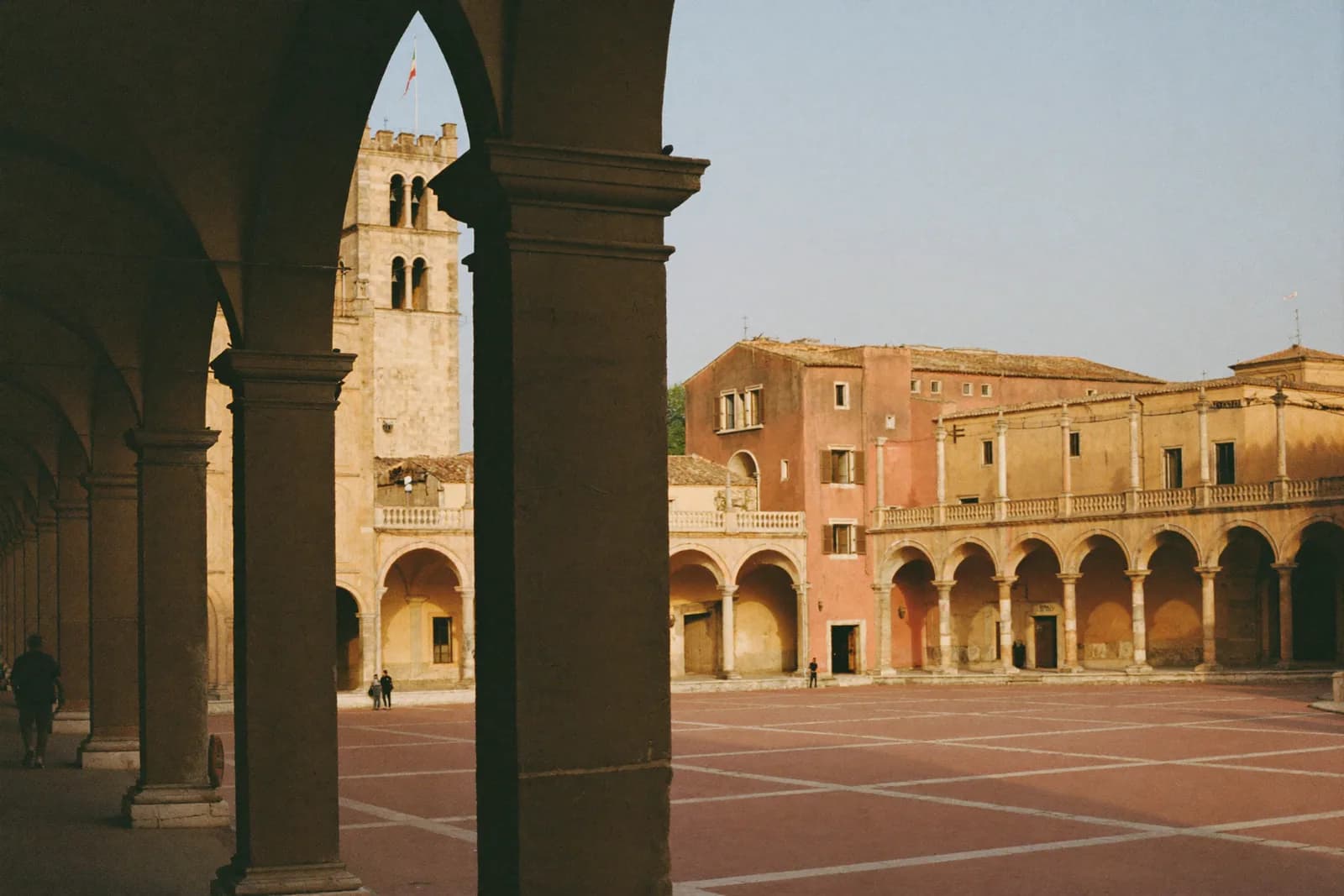
Study in Italy
Home to some of Europe’s oldest universities, comparatively affordable public higher education, and internationally recognised study options in areas such as design, architecture, fashion and the arts.
Italy may suit you if…
- You are drawn to design, architecture, fashion or the arts.
- You want to explore more affordable public university options in Europe.
- You are interested in learning Italian alongside your studies.
- You would enjoy studying in a country with rich cultural and historical resources.
Advantages and trade-offs
Italy offers a distinctive combination of academic choice, cultural experiences and potential cost savings. It is also important to consider language, housing and administrative requirements before deciding.
Advantages
- Public university fees can be considerably lower than those at private institutions.
- Fees at many public universities take family income into account.
- Italy has an international reputation in design, fashion, architecture, engineering and the arts.
- A growing selection of programmes is taught in English.
- Students can choose from a wide range of historic university cities.
- Living costs can be significantly lower outside cities such as Milan and Rome.
Trade-offs
- Administrative procedures can involve substantial documentation.
- Most undergraduate programmes are still taught in Italian.
- English-taught options are more extensive at postgraduate than undergraduate level.
- Housing can be expensive and competitive in Milan, Rome and Bologna.
- Students considering regulated professions should check how their qualifications will be recognised.
- Italian language skills can be important for internships and graduate employment, even after an English-taught degree.
What you can study
- Italian language courses
- Foundation programmes
- Undergraduate degrees (Laurea)
- Master’s degrees (Laurea Magistrale)
- Single-cycle degrees in certain professions
- Fashion, design and fine arts programmes
- Higher education in art, music and dance (AFAM)
- PhD and other doctoral research programmes
Popular subjects
- Architecture
- Fashion and design
- Fine art and restoration
- Engineering
- Medicine, including English-taught programmes
- Business and economics
- Food science and gastronomy
Getting in
General entry requirements
Entry requirements depend on the level and programme. Undergraduate applicants normally need a recognised secondary-school qualification that gives access to higher education. Postgraduate applicants need an appropriate previous university degree.
Institutions assess foreign qualifications and may ask for translated, legalised or formally verified academic documents. Some applicants may also need a Declaration of Value or documentation from CIMEA.
Students who require a study visa normally complete their official pre-enrolment application through the Universitaly portal, following the admission process specified by their chosen institution. The institution evaluates and validates the pre-enrolment application.
Some programmes have restricted admission and require an entrance examination or an additional selection process.
English and Italian language requirements
Students must demonstrate sufficient proficiency in the language in which their programme is taught.
English-taught programmes commonly expect approximately B2-level English or equivalent evidence. Accepted qualifications and test scores vary by institution and programme.
Italian-taught programmes generally require adequate Italian proficiency, commonly around B2 level. Universities may accept recognised certificates or conduct their own language assessments.
Always check the exact language requirements with the institution before applying.
Typical intakes
September and October are the main university intake months in Italy. Some private institutions, specialist schools, foundation programmes and postgraduate courses also offer January or February starts.
Application and Universitaly pre-enrolment deadlines vary by institution. Restricted-access programmes may have separate entrance examination dates. There is no single application deadline for all Italian universities.
When each stage happens
These are planning milestones, not fixed nationwide deadlines. Follow the timetable published by your chosen institution.
12 months before
Research institutions and courses, check qualification requirements and identify any restricted-admission programmes.
9–12 months before
Check language requirements, start preparing academic documents and explore scholarships and financial support.
6–9 months before
Begin university applications in line with each institution’s timetable. Arrange translations, legalisation or qualification documentation where necessary.
After admission or pre-selection
If you require a study visa, complete the relevant Universitaly pre-enrolment procedure and allow time for the institution to validate your application.
Around 2–4 months before
After the appropriate university and Universitaly stages are complete, apply for your study visa through the Italian embassy or consulate responsible for your place of residence, allowing for local appointment times and deadlines.
Before travel
Arrange accommodation, health insurance, finances and travel.
After arrival
Non-EU students entering for long-term study normally need to apply for an Italian residence permit soon after arriving.
What it costs, realistically
Tuition fees
Fees vary by institution, programme and financial circumstances.
As a general guide, public university tuition is often approximately €900–€4,000 per year, while private institutions commonly charge approximately €6,000–€20,000 or more per year.
Many public universities assess fees partly against family income. The calculation method and supporting documents differ between institutions and individual circumstances. Specialist private schools, particularly in fashion and design, may charge substantially more.
Confirm the current fee and any available reductions directly with the institution.
Living costs
A useful starting budget is approximately €700–€1,100 per month, depending on the city, accommodation and lifestyle. Students in more expensive locations may need a higher budget.
Milan is among Italy’s more expensive student cities. Smaller cities and some destinations in central and southern Italy can be more affordable. Accommodation is often the biggest expense, so begin researching housing early.
Scholarships
Financial support may be available through universities, regional right-to-study schemes and national programmes.
Regional support can include tuition reductions, grants, accommodation and subsidised meals, depending on financial and academic eligibility.
The Italian Ministry of Foreign Affairs and International Cooperation offers MAECI scholarships for eligible international students from specified countries. Invest Your Talent in Italy is another programme for eligible applicants from selected countries pursuing qualifying English-taught postgraduate studies, including areas such as engineering, advanced technologies, architecture, design, economics and management.
Eligibility, funding and application deadlines change between academic years. Always check the current scholarship call before applying.
All costs and funding information on this page are indicative. Actual fees, expenses, financial requirements and scholarship availability depend on your circumstances and may change.
Visa process overview
EU, EEA and Swiss nationals generally do not require an Italian study visa. Other students may need a long-stay study visa, depending on their nationality and intended length of stay.
Students who need a visa for Italian higher education normally submit their official pre-enrolment application online through Universitaly. The chosen institution assesses and validates the application before the student applies for a visa through the competent Italian embassy or consulate.
Visa applicants generally need evidence of their admission or pre-enrolment, sufficient funds, suitable accommodation and appropriate health insurance. Academic documents may also need translation, legalisation or formal verification.
Validation by a university does not guarantee a visa. The final decision belongs to the Italian diplomatic or consular authority.
Check the requirements of the Italian mission responsible for your place of residence. Non-EU students arriving for long-term study normally need to apply for a residence permit after arrival.
Working while studying
A valid Italian residence permit for study generally allows part-time employment for up to 20 hours per week, with a maximum of 1,040 working hours per year.
Employment must remain compatible with the student’s studies and residence-permit conditions.
Work and post-study options
International graduates who complete an eligible qualification in Italy may have options to remain after their studies.
Graduates with suitable employment may be able to convert a valid study residence permit into a permit for work, subject to the applicable requirements.
Eligible graduates may also apply for a residence permit to look for employment or establish a business related to their completed studies. This route is generally issued for 9–12 months.
These routes are not automatic. Eligibility and procedures depend on individual circumstances and current immigration rules.
*This page provides general information, not individual immigration advice. Confirm current requirements with the relevant Italian government authority before making decisions that depend on your immigration status.*
Popular cities
Milan
A major centre for fashion, design, business and finance, with extensive study choices and some of Italy’s highest living costs.
Rome
Italy’s capital combines major universities, international organisations and a wealth of cultural and historical resources.
Bologna
One of Europe’s best-known university cities, recognised for its longstanding academic tradition and large student community.
Florence
A compelling choice for students interested in art, architecture, restoration, fashion and design.
Turin
Known for opportunities in engineering, automotive studies, design and technology.
Padua
A historic university city with established strengths in science, medicine and research.
Selected institutions and education routes
Study With FM can support applications across different types of Italian higher-education providers, including public universities, specialist academies and private institutions, according to the student’s profile and chosen programme.
Our current network includes:
- Istituto Marangoni — specialist study options in fashion, design, art and related creative industries.
- Galileo Global Education — selected education-group routes involving specialist creative and professional institutions in Italy. Available options depend on the specific institution and programme.
We can also help students explore other suitable institutions according to their subject, academic background, budget and preferred city.
Studying in Italy: frequently asked questions
Official sources and further information
- Universitaly — official international student pre-enrolment information
- Study in Italy — Italian Ministry of Foreign Affairs
- Visto per l’Italia — official visa information
- Ministry of University and Research (MUR)
- European Education Area — study in Italy and indicative costs
- Italian Ministry of Foreign Affairs — studying in Italy and working rights
- MAECI — Italian government scholarships
- Integrazione Migranti — residence permits and post-study routes
Content owner: Temitope Shobowale (Sarah), Student Advisor
Reviewed and approved by: Mahin Shafiei, Director & Special Case Advisor
Last reviewed: 7 September 2026
Compare other destinations
Check if Italy fits your profile
Tell us about your academic background, preferred subject, budget and study timeline. We will help you assess whether Italy is a realistic option and explore suitable alternatives if needed.