
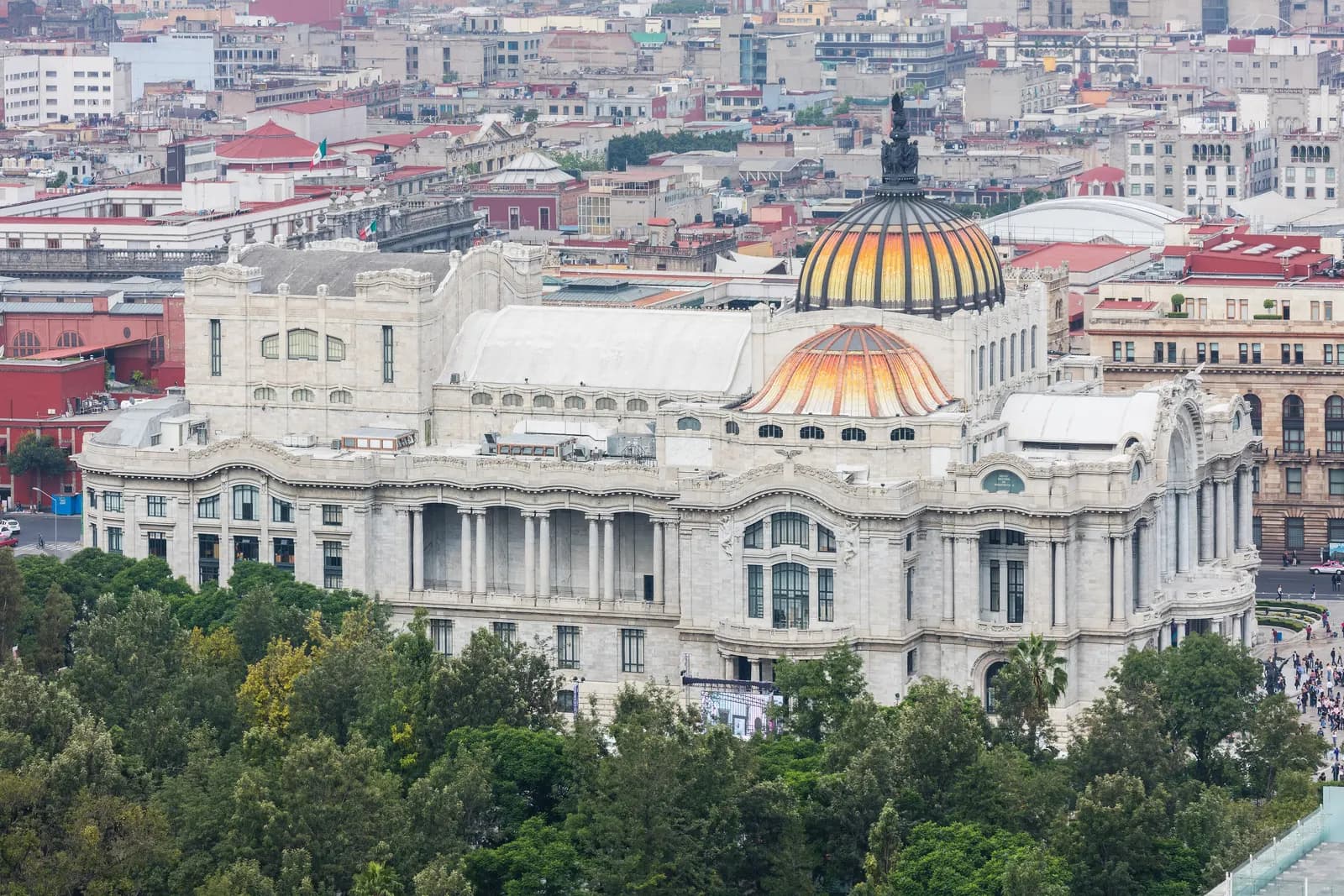
Study in Mexico
Mexico offers a diverse higher-education system, from large public research universities and technological institutions to internationally oriented private universities. It can be an excellent place to explore engineering, business, medicine, the arts and much more — while experiencing life and study in a predominantly Spanish-speaking country. The right choice depends on your course, language ability, budget and preferred city. Compare these carefully before committing.
Check current travel advice. Safety conditions vary considerably between Mexican states, cities and neighbourhoods. The UK Foreign, Commonwealth & Development Office (FCDO) advises against all but essential travel to certain parts of Mexico. Before choosing a campus or accommodation, review current FCDO travel advice, your university's local guidance and the transport options available.
Who might Mexico suit?
Mexico may be a good option if you:
- Want to improve your Spanish while completing a degree or spending time on exchange.
- Are comparing large public universities with internationally focused private institutions.
- Are interested in engineering, technology, business, economics, health sciences, social sciences, arts or design.
- Want to study Latin America, international relations, politics, development or Spanish-language culture.
- Would enjoy university life in a major city such as Mexico City, Monterrey or Guadalajara.
- Want to compare institutions with substantially different tuition fees and living costs.
- Are considering postgraduate study or research as well as undergraduate programmes.
Advantages and trade-offs
What makes Mexico attractive?
- Broad academic choice. Mexico has major public research universities, technological institutions and private universities across a wide range of subjects.
- Different study environments. You can compare large public campuses with private institutions that may offer smaller classes, international links or stronger industry-focused provision in particular subjects.
- Spanish-language immersion. Studying and living in Mexico can help you develop academic and everyday Spanish.
- A range of budgets. Some public institutions are relatively affordable, while leading private universities can be substantially more expensive. You can compare options rather than assuming one national price.
What should you consider?
- Teaching language: Most full undergraduate degrees are taught mainly in Spanish. English-taught degrees and individual modules exist, but they are not available everywhere.
- Programme recognition: At private institutions, check the official recognition of the specific programme, not just the university's name.
- Admissions: There is no single national university application system. Some institutions require competitive entrance examinations.
- Location and safety: Local conditions, commuting and accommodation options matter.
- Employment rights: Holding student residence status does not automatically allow you to take paid work.
What can you study?
Qualification levels
| Qualification in Mexico | What it means |
|---|---|
| Técnico Superior Universitario / Profesional Asociado | Shorter, typically technical or professionally focused higher-education qualifications. |
| Licenciatura | The principal undergraduate degree, commonly lasting eight to ten semesters, although duration depends on the subject and institution. |
| Especialidad | Specialised postgraduate study, often with a professional focus. |
| Maestría | Master's-level study, with duration and entry requirements set by the programme. |
| Doctorado | Doctoral study involving advanced academic work or research. |
Popular subjects
- Engineering, technology, computing, cybersecurity, AI and data science
- Business, economics, finance, management and entrepreneurship
- Medicine, dentistry, health sciences, biotechnology and life sciences
- Law, international relations, political science and social sciences
- Architecture, urban studies, art, design, communication and media
- Psychology, education, languages and humanities
- Hospitality, tourism and gastronomy
- Agriculture, veterinary and environmental sciences
Programmes, specialisations and professional accreditation vary between universities. If you plan to enter a regulated profession, check whether the qualification will meet the requirements in the country where you intend to practise.
Entry requirements and recognition
Undergraduate admission
You will generally need a secondary-school qualification comparable to Mexico's bachillerato. Depending on the institution and programme, you may also need:
- School certificates, transcripts and minimum grades
- An entrance or subject-specific examination
- An interview or motivation statement
- A portfolio for creative courses
- Proof of Spanish or English proficiency
- Certified documents, translations or evidence of equivalence
- Additional prerequisites for highly competitive or regulated subjects
Public universities such as Universidad Nacional Autónoma de México (UNAM) operate defined selection rounds. Private institutions set their own procedures and may take a broader view of an applicant's academic profile.
Master's and doctoral admission
Master's applicants generally need an appropriate undergraduate degree. Universities may request a transcript, CV, references, a statement of purpose, admissions tests, relevant experience or language evidence.
Doctoral applications commonly involve relevant previous study, a research proposal, academic references and a suitable supervisor or research group. Requirements are programme-specific.
Do foreign qualifications need revalidation?
Not always. Mexico's education authority, SEP, distinguishes university admission from the formal revalidación of previous overseas study. Formal revalidation of higher-education studies completed abroad is generally not required simply to enter Mexico's education system, except in certain areas such as teacher education. It may matter for recognition of previous study or professional practice.
Your chosen university can still require transcripts, certified translations, evidence of equivalence or other documents. Confirm its requirements for your qualification and level of entry.
How to check a private programme's recognition
For private higher education, check whether the exact programme has the appropriate Reconocimiento de Validez Oficial de Estudios (RVOE) or another valid legal basis for official recognition. RVOE is programme-specific: recognition of one course does not automatically extend to every programme offered by the institution.
Use SEP's SIRVOES database and verify the programme, campus and study mode before enrolling.
Language requirements, intakes and deadlines
Do you need Spanish?
Most Mexican university programmes, particularly undergraduate degrees, are taught in Spanish. Universities set their own language requirements and may accept recognised language qualifications, previous study in Spanish or their own assessments.
Selected institutions offer English-taught degrees or courses. Tecnológico de Monterrey offers certain English-language options at particular campuses, while Universidad Iberoamericana (IBERO) has English-taught courses in selected subjects. An English-language university website does not necessarily mean your full degree is taught in English.
There is no universal Mexico-wide DELE, IELTS or TOEFL score. Check the precise teaching and assessment language of your intended course.
Typical university intakes
- August: A major entry period, particularly for undergraduate study.
- January or February: Available at selected universities and for selected programmes.
Application periods are not standardised. Public universities may have fixed competitive selection rounds, while some private universities have longer application windows. Not every course is available at both intakes.
When to start preparing
12–18 months before your intended start
Research courses, campuses and costs. Check teaching languages, recognition, eligibility and whether you need an entrance examination.
9–12 months before
Prepare language tests and academic documents. Check translations, admissions tests, scholarships and likely immigration requirements.
6–10 months before
Apply within each university's own deadlines. Complete examinations, interviews, portfolios and scholarship applications where required.
After receiving an offer
Confirm your place, fees and payment schedule. Obtain the official acceptance letter, review accommodation options and begin the appropriate visa preparations.
Before travelling
Check immigration documents, finances, health insurance, local safety advice and the university's arrival and registration instructions.
Begin researching approximately 12 months ahead whenever possible. This is planning guidance, not a national admissions deadline.
Tuition fees, living costs and scholarships
Tuition fees
There is no meaningful single annual tuition figure for Mexico. Prices differ greatly between public and private institutions, programmes, campuses and student categories.
| Institution type | What to expect |
|---|---|
| Public universities | Often comparatively affordable, but international-student charges can differ from domestic fees. |
| Private universities | Typically higher and highly programme-dependent; some programmes exceed MXN 150,000 per semester. |
For a concrete public-university example, Universidad de Guadalajara's published 2026 tariff lists a foreign undergraduate matriculation charge of MXN 24,895 and a foreign postgraduate matriculation charge of MXN 39,754. These are that institution's published charges, not standard fees for all Mexican public universities.
Always confirm your chosen university's current tuition, compulsory fees, payment dates and refund conditions.
Living costs
Your budget will depend on the city, housing, transport and lifestyle. Universidad de Guadalajara estimates approximately USD 500 per month for accommodation, food and local transport for incoming exchange students in Guadalajara. This is a location- and student-category-specific estimate, not a reliable nationwide budget.
Include accommodation deposits, utilities, meals, transport, health insurance, phone and internet, study materials, personal expenses, flights and immigration fees. Major-city housing or private accommodation may require a considerably larger budget.
Scholarships and other funding
Some Mexican universities offer merit awards, tuition support, research funding, postgraduate scholarships or other financial assistance. Eligibility and the amount covered vary by institution and programme.
The Mexican Government's Excellence Scholarships for Foreign Students are administered through AMEXCID. Each call has its own nationality, institution, study-level and programme criteria, with a substantial focus on postgraduate and advanced academic study. Do not assume the scheme funds every undergraduate degree.
Start scholarship research early and confirm the current rules before relying on any award in your budget.
Costs and eligibility can change. Figures above are examples or estimates, not quotations or guarantees. Confirm up-to-date fees, expenses and scholarship terms with the relevant institution or authority before making a financial commitment.
Student visas, residence and health insurance
Study lasting 180 days or less
For short courses or academic activity lasting 180 days or less, non-remunerated visitor arrangements may apply. Whether you need a visitor visa depends on your nationality and circumstances. British passport holders are generally visa-exempt for qualifying non-remunerated visits of this length, including study.
Visitor status does not give permission to undertake paid work. Entry and the period of stay remain subject to Mexican immigration authorities.
Study lasting more than 180 days
International students intending to study for more than 180 days generally need a Temporary Resident Student Visa (Visa de Residente Temporal Estudiante) before travelling.
The consulate will usually require:
- A valid passport, application form and passport photograph
- An official acceptance letter from an eligible Mexican educational institution
- Evidence of sufficient funds
- Evidence of lawful residence in the country of application, where applicable
- Payment of the consular application fee
The acceptance letter should identify your programme, level and subject, start and end dates, tuition fees and the institution's details. Your consulate may request further documentation.
Financial evidence and processing times
You must demonstrate sufficient resources for your studies and living expenses. Depending on the consulate's rules and your circumstances, financial evidence may include your own funds, eligible parental or guardian support, a scholarship or other accepted funding.
There is no single financial amount that should be assumed to apply to every applicant or consulate. Check the requirements published by the Mexican embassy or consulate responsible for your application.
Processing times also vary. The Mexican Consular Section in London currently indicates approximately 2–10 working days after receiving a complete and satisfactory student-visa application. Allow extra time to obtain an appointment and prepare documents. Avoid booking non-refundable flights before your visa is approved.
After arriving in Mexico
The initial Temporary Resident Student Visa is generally single-entry and valid for up to 180 days as an entry document. It is not your ongoing residence card.
You must normally complete the exchange process with the Instituto Nacional de Migración (INM) within 30 calendar days of entering Mexico to obtain your Temporary Resident Student Card. The initial card is generally issued for one year; renewals may be required for longer studies.
Health insurance
Arrange suitable health insurance before travelling. Some universities and exchange schemes require specific cover. A comprehensive policy should account for illness, accidents, hospital treatment and emergencies, and, where appropriate, medical evacuation and repatriation.
Immigration information is general guidance, not individual legal advice. Your nationality, residence, programme and the rules in force at the time of application determine the process. Confirm your position with your consulate and INM.
Working during and after your studies
Can you work while studying?
Not automatically. Eligible students with Temporary Resident Student status may apply to INM for permission to undertake paid employment.
The student work-permission route generally requires a valid student residence card, an employer's job offer, the educational institution's written agreement and a role related to the student's studies. It is intended for qualifying higher-education, postgraduate and research students.
Do not assume a universal 20-hour-per-week allowance or automatic permission for self-employment. Obtain the relevant authorisation before starting paid work.
Can you stay and work after graduation?
Mexico does not provide an automatic graduate work visa simply because you complete a degree. Graduates who qualify on another immigration basis — for example, through an eligible offer from a registered Mexican employer — may be able to apply to change from Temporary Resident Student to Temporary Resident status.
If employment after graduation is important to you, check the current INM rules before your student status expires.
Popular student cities
Mexico City
Best for: Broad academic choice, science, engineering, medicine, economics, law, politics, arts and international affairs.
Home to major institutions including UNAM, Instituto Politécnico Nacional (IPN), ITAM and IBERO. It offers extensive academic choice, but travel distances and daily commuting can significantly affect student life.
Monterrey
Best for: Engineering, technology, business, entrepreneurship and health sciences.
A major university and industry centre, with Tecnológico de Monterrey and Universidad Autónoma de Nuevo León (UANL). Compare campus locations, accommodation, transport and climate.
Guadalajara
Best for: Technology, engineering, medicine, design, communication and business.
Home to Universidad de Guadalajara's large public university network, as well as private institutions. It offers a substantial urban student experience outside Mexico City.
Puebla and Cholula
Best for: Engineering, business, international relations, social sciences and the arts.
An established university area with institutions including Universidad de las Américas Puebla (UDLAP) and Benemérita Universidad Autónoma de Puebla (BUAP).
Querétaro
Best for: Engineering, technology, business and professional study.
Includes Universidad Autónoma de Querétaro, Tecnológico de Monterrey and Universidad Anáhuac Querétaro. It may appeal to students seeking a different metropolitan environment from Mexico City.
Mérida
Best for: A southeastern Mexican city environment and selected public or private university options.
Institutions include Universidad Autónoma de Yucatán and Universidad Anáhuac Mayab. Check the availability of your particular subject before choosing the city.
Choosing where to live: Compare your course's campus, rent, commute, accommodation support and up-to-date local safety guidance — not just the city's reputation.
Selected universities and institutions
These are examples to help you explore Mexico's academic landscape. They are not presented as Study With FM partner institutions, and inclusion does not indicate an admissions arrangement.
| Institution | Location and areas to explore |
|---|---|
| Universidad Nacional Autónoma de México (UNAM) | Primarily Mexico City; sciences, medicine, engineering, law, humanities, social sciences and research. |
| Tecnológico de Monterrey | Multiple campuses; engineering, computing, business, entrepreneurship, health and internationally oriented study. |
| Instituto Politécnico Nacional (IPN) | Primarily Mexico City and other academic units; engineering, technology, mathematics and applied sciences. |
| Universidad de Guadalajara (UdeG) | Guadalajara and wider Jalisco; medicine, engineering, social sciences, arts and broad public higher education. |
| Universidad Autónoma de Nuevo León (UANL) | Monterrey and Nuevo León; engineering, health, science, business, law and social sciences. |
| Instituto Tecnológico Autónomo de México (ITAM) | Mexico City; economics, finance, mathematics, business, law and international relations. |
| Universidad Iberoamericana (IBERO) | Mexico City; communication, social sciences, design, architecture, business and humanities. |
| Universidad Anáhuac México | Mexico City area; business, hospitality, tourism, health, international relations and engineering. |
| Universidad Panamericana | Mexico City, Guadalajara and Aguascalientes; business, engineering, law and professional study. |
| Universidad de las Américas Puebla (UDLAP) | Cholula, Puebla; engineering, business, economics, sciences, social sciences, arts and design. |
Always check the exact campus, programme recognition, language, entry requirements and fees on the institution's official website.
Frequently asked questions
Related reading
- Choosing the Right Course, University and Study Destination — Compare academic fit, qualifications, teaching languages and realistic options.
- Budgeting for a Degree Abroad — Plan beyond tuition to include housing, insurance, documents and travel.
- Education Systems Explained — Understand how qualifications and study routes can differ by country.
Useful official resources
- Secretaría de Educación Pública (SEP) — Mexico's education system and official recognition.
- SIRVOES — Search for RVOE recognition of private higher-education programmes.
- DGAIR — Revalidation and recognition of studies completed abroad.
- Instituto Nacional de Migración (INM) — Student residence cards, work permission and changes of status.
- Mexican Consular Section in London — Student visa requirements and consular procedures for applicants using London.
- Mexican Ministry of Foreign Affairs (SRE) — Mexican consular services and entry information.
- AMEXCID — Government Excellence Scholarships for eligible foreign students.
- Universidad de Guadalajara's 2026 fees — Published institutional fee examples.
- UK FCDO Mexico travel advice — Current regional safety and travel advice.
Content owner: Tolu-Tom Adeyemo, Student Counsellor
Last reviewed: 9 September 2026
Is Mexico the right fit for you?
Your qualifications, preferred course, Spanish proficiency, budget and intended start date all matter. Share your plans with Study With FM and we can help you assess suitable educational options and what to check before applying.