
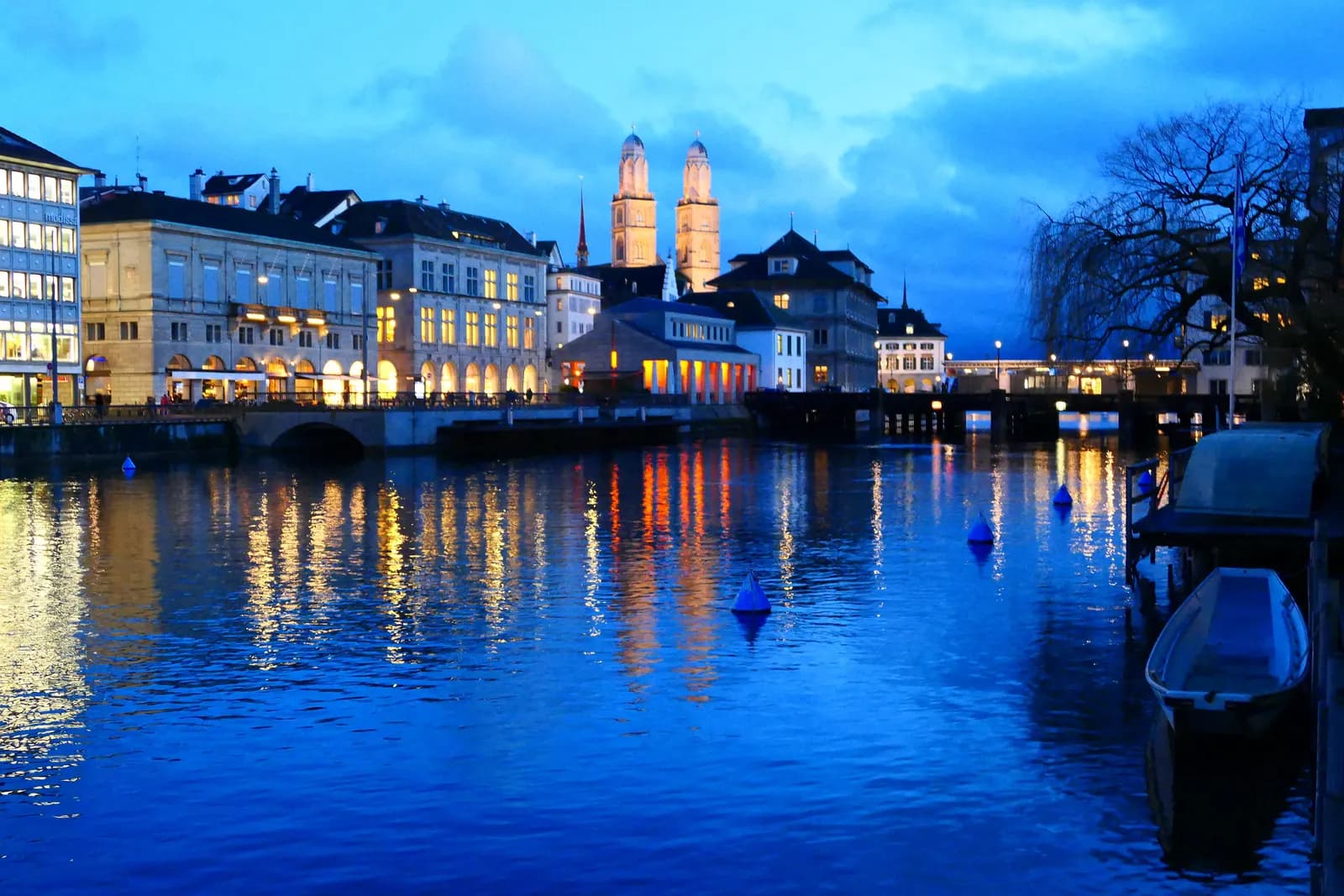
Study in Switzerland
Switzerland combines research-intensive universities, leading institutes of technology and career-focused universities of applied sciences in a multilingual, international setting. It could be an excellent fit if you value academic quality, specialist programmes and international experience. However, living costs are high, many Bachelor's degrees require German, French or Italian, and admission can be demanding. Choosing the right programme starts with understanding those realities.
Plan beyond tuition. Some Swiss public universities charge comparatively moderate fees, but your budget must also cover accommodation, food, health insurance, transport and everyday living costs.
Is Switzerland right for you?
Switzerland may suit you if you:
- Want to study at an established research university, federal institute of technology or university of applied sciences.
- Value research, academic rigour and opportunities to develop specialist knowledge.
- Prefer a choice between traditional academic degrees and more practically oriented programmes.
- Are comfortable studying or living in a multilingual environment.
- Are considering postgraduate study, where English-taught programmes are more common.
- Are interested in subjects such as engineering, business, finance, international affairs, life sciences or hospitality.
Advantages
- Academic choice: Research universities and universities of applied sciences offer different routes to suit different goals.
- Quality assurance: Swiss higher education institutions operate within a national accreditation framework.
- International environment: Switzerland brings together several language regions and a substantial international academic community.
- Specialist strengths: Options include engineering and technology, scientific research, business, international affairs and hospitality education.
- Public-university fees: Tuition at some public universities is relatively moderate, although fees vary considerably.
Things to consider
- High living costs: Accommodation, insurance and everyday expenses can make Switzerland an expensive destination overall.
- Teaching languages: Many Bachelor's programmes are taught in German, French or Italian rather than English.
- Variable entry requirements: Universities assess international qualifications individually, sometimes requiring entrance examinations or further evidence.
- Limited access to some subjects: Medicine and certain regulated programmes have particularly restrictive admission conditions.
- Post-study restrictions: Non-EU/EFTA graduates do not receive an automatic open-ended work permit.
What can you study?
Swiss higher education generally follows the Bologna system and uses ECTS credits.
| Study level | Typical structure |
|---|---|
| Bachelor's degree | Usually 180 ECTS credits, typically three years of full-time study. |
| Master's degree | Often 90–120 ECTS credits, typically 1.5–2 years of full-time study. |
| Doctoral / PhD study | Research-led programmes following an appropriate Master's qualification, subject to university and faculty requirements. |
| Universities of applied sciences | Bachelor's and Master's programmes with a stronger professional and practical emphasis; some courses require relevant work experience. |
Popular subjects
- Engineering, technology and architecture
- Computer science, artificial intelligence and data science
- Business, economics, finance and management
- Life sciences, chemistry, biotechnology and environmental sciences
- Law, political science and international relations
- Hospitality, tourism and service management
- Mathematics, physics and natural sciences
- Communication, languages, humanities and social sciences
- Art, design and teacher education
- Medicine and health sciences, subject to particularly strict eligibility rules
Entry requirements
Bachelor's degrees
You will usually need a secondary-school qualification accepted for university entry in Switzerland. Eligibility depends on the country in which you studied, your subjects and grades, and the university and programme you choose.
Some applicants must also provide proof of eligibility to study the same subject in their home education system, complete additional university study or pass an entrance examination. ETH Zurich and EPFL have especially detailed rules for applicants with foreign school-leaving qualifications.
Check the swissuniversities country-specific admission requirements alongside the university's own admission page.
Universities of applied sciences
These institutions combine academic study with professional preparation. Depending on your qualification and programme, you may need relevant practical experience or vocational preparation; some routes require approximately one year of experience.
Master's and doctoral study
For a Master's degree, you normally need a recognised Bachelor's degree in the same or a sufficiently related subject. Institutions may assess your previous modules, grades, language proficiency and suitability for the programme.
Doctoral applicants normally need an appropriate postgraduate qualification and must meet the university's research and supervision requirements.
An important note about medicine
Medical degrees are highly restricted. According to swissuniversities, applicants without Swiss citizenship or a qualifying Swiss residence status generally cannot enter medical studies because places are limited. Medical programmes are taught in German or French, not English. Check eligibility directly before planning an application.
Language requirements
The teaching language depends on the institution, region and programme.
- German: Common at universities in German-speaking Switzerland.
- French: Common at universities in French-speaking Switzerland.
- Italian: Used for selected programmes in Italian-speaking Switzerland.
- English: More widely available at Master's and doctoral level than at Bachelor's level.
Universities determine their own accepted language tests and minimum standards. For example, ETH Zurich may require C1 German for Bachelor's admission. EPFL considers B2 French necessary to follow its Bachelor's programmes and strongly recommends C1.
English-taught programmes may request IELTS, TOEFL or another accepted qualification. Exemptions sometimes apply, but should never be assumed. Check the requirements for your exact degree.
Intakes and application deadlines
September — main intake. The Autumn Semester offers the broadest selection of Bachelor's and Master's programmes.
February — limited intake. Some programmes accept students for the Spring Semester, but many admit new students in autumn only.
Switzerland has no single national application deadline. Dates depend on the institution, degree, previous qualifications, selection requirements and sometimes visa status.
Examples for Autumn 2027 entry
| Institution and applicant route | Application dates |
|---|---|
| ETH Zurich — Bachelor's, foreign school-leaving qualification | 1 December 2026–31 March 2027 |
| ETH Zurich — Master's, international Bachelor's degree | 1–30 November 2026 |
| University of Geneva — many Master's applicants with a foreign Bachelor's degree | Deadline: 28 February 2027 |
These are examples, not universal deadlines. Some entrance-examination routes can affect the year in which study actually begins. Always check the current dates and conditions for your chosen programme.
Your application timeline
12–18 months before your intended start
Explore programmes, compare academic and applied-sciences routes, check recognition of your qualifications, and confirm the teaching language. Identify entrance tests and any restrictions that could affect your eligibility.
9–12 months before
Prepare language tests, transcripts, certificates, references and any required certified translations. Research scholarships and calculate the full cost of study.
6–10 months before
Submit applications within the university's published window and complete any examinations, interviews or portfolio requirements. Some Master's applications open earlier than this, including ETH Zurich's November window for international applicants.
After receiving an offer
Follow the institution's acceptance instructions, make an accommodation plan, arrange finances and begin the appropriate visa or residence-permit process.
Before travel
Confirm travel and enrolment documents, insurance arrangements, accommodation and the local registration procedure for your canton.
Tuition fees and living costs
Tuition fees
Swiss tuition varies significantly by university, degree level and applicant category. The following published figures are for foreign-student tuition per semester in 2026/27 at selected universities; compulsory or one-time charges may be additional.
| University | Tuition per semester |
|---|---|
| University of Geneva | CHF 435 |
| University of Lausanne | CHF 500 |
| University of Basel | CHF 850 |
| University of Fribourg | CHF 870 |
| University of Lucerne | CHF 1,025 |
| University of Zurich | CHF 1,220 Bachelor's / CHF 820 Master's |
| ETH Zurich | CHF 2,190 |
| EPFL | CHF 2,190 |
| University of Bern | CHF 2,550 |
| University of St. Gallen | CHF 3,103 Bachelor's / CHF 3,317 Master's |
| Università della Svizzera italiana (USI) | CHF 4,000 |
For the universities listed, tuition is approximately CHF 870–8,000 per academic year, before additional fees. This is not a standard fee for all Swiss institutions or all students.
Universities of applied sciences have different fee structures. At many institutions, foreign-student fees fall roughly between CHF 850 and CHF 5,000 per semester, while specialist programmes can be much more expensive. EHL Hospitality Business School, for example, has substantially higher tuition and compulsory programme costs than a typical public university.
Always request the full fee breakdown for your chosen programme, including any compulsory charges.
Living costs
As a planning guide, allow approximately CHF 1,800–2,500 per month, depending on the city, accommodation and lifestyle. This is not an official national immigration-finance requirement.
Your budget should include:
- Accommodation and utilities
- Food and groceries
- Health insurance
- Transport
- Phone, internet and study materials
- Clothing, personal expenses and leisure
Accommodation can be particularly costly or difficult to secure in Zurich, Geneva and Lausanne. Compare your budget with your university's current cost-of-living guidance before applying.
Scholarships
Some universities offer merit awards, excellence scholarships, programme funding, research support or other financial assistance. Competition, eligibility, values and deadlines vary, and funding should not be assumed.
Swiss Government Excellence Scholarships for 2027/28 mainly support international early-career researchers who have completed a Master's degree. Certain arts Master's scholarships are available to applicants from eligible countries. They are not a general scholarship scheme for all international Bachelor's or taught Master's students. The listed monthly amount for eligible scholarship holders is CHF 2,450, subject to scheme conditions.
Check scholarship deadlines when shortlisting courses; they may be separate from university admission deadlines.
Student visas and residence permits
Immigration rules depend on nationality and the length of your course. Swiss cantons administer residence matters, so the process and evidence can vary by study location.
EU/EFTA students
EU/EFTA citizens can generally enter Switzerland without a visa. For study lasting more than three months, they must complete local registration and obtain the appropriate residence permit. Evidence normally includes university admission, sufficient resources and suitable health-insurance cover. Registration is generally required within 14 days of arrival.
Non-EU/EFTA students
For longer-term study, students from outside the EU/EFTA generally require Swiss residence authorisation and, depending on their nationality, a national Type D visa before travelling. Most UK citizens are subject to the third-country rules unless protected rights or another exception apply.
Applications are normally submitted to the relevant Swiss embassy or consulate and referred to the responsible cantonal migration authority. Documents can include:
- Proof of admission and academic qualifications
- Passport and completed application forms
- Proof of sufficient funds and ability to pay study costs
- Accommodation information
- Study plan, CV or motivation letter
- Sponsorship or scholarship documents, where relevant
Follow the current checklist provided by the Swiss representation responsible for your country of residence and by your destination canton.
Financial requirements
Students must show they can support themselves. There is no single financial threshold that applies uniformly across all Swiss cantons. For example, Zurich uses CHF 21,000 in certain student visa and residence cases; different requirements can apply elsewhere, including how the funds must be held or evidenced.
Processing and arrival
Long-stay visa decisions commonly take approximately 8–12 weeks, but this is only an estimate and cases may take longer. Apply as early as the relevant authorities permit.
After arrival, complete your local registration and residence formalities. You must also have suitable health-insurance cover. Some international students qualify for exemptions from compulsory Swiss insurance if they hold recognised equivalent cover; the competent cantonal authority decides.
This is general study and immigration information, not advice on your individual immigration circumstances. Confirm the latest requirements with the relevant Swiss authorities before applying or travelling.
Working while studying
Work rights depend on nationality and authorisation.
Non-EU/EFTA students at eligible Swiss higher education institutions can normally begin supplementary employment no earlier than six months after starting their studies, work for up to 15 hours per week during term, and may work more during official holidays if authorised. The institution must confirm that the job is compatible with the course, and the employer normally applies for the required permission. Different rules may apply to compulsory internships and certain academic positions.
EU/EFTA students generally enjoy broader labour-market access, subject to applicable residence, registration and employment rules.
Do not begin work until you have confirmed your position with the university and the responsible cantonal authority.
Staying in Switzerland after graduation
Eligible non-EU/EFTA graduates of recognised or accredited Swiss higher education institutions can generally seek permission to remain for up to six months to look for suitable work related to their qualifications.
Finding a job does not automatically grant the right to work. The prospective employer must obtain the necessary authorisation. In certain cases, graduates may benefit from an exception to the usual Swiss/EU/EFTA labour-market priority rule where the job is of significant scientific or economic interest to Switzerland.
Switzerland does not offer an automatic, unrestricted graduate work visa comparable to some other study destinations. EU/EFTA graduates have broader options under free-movement rules.
Popular student cities
Zurich
Known for: Engineering, technology, science, finance and business.
Home to ETH Zurich and the University of Zurich, with a strong research and business environment. Accommodation and living costs are high.
Geneva
Known for: International relations, diplomacy, law, public health and global affairs.
Home to the University of Geneva and the Geneva Graduate Institute, with many international organisations nearby. French is important for much undergraduate study, and living costs are high.
Lausanne
Known for: Engineering, computing, science, economics and hospitality.
EPFL, the University of Lausanne and EHL offer distinct academic and specialist options. French matters for many Bachelor's degrees, and student housing can be competitive.
Basel
Known for: Life sciences, medicine, pharmaceuticals and biotechnology.
The University of Basel sits within a major life-sciences region. German is useful for daily life and many undergraduate programmes.
Bern
Known for: Science, medicine, law, humanities and public policy.
Switzerland's federal city provides a somewhat quieter setting alongside the University of Bern and Bern University of Applied Sciences.
St. Gallen
Known for: Business, economics, finance, management and law.
The University of St. Gallen is a distinctive choice for business-related study in a smaller city. Check whether your programme is taught in German or English.
Lugano
Known for: Economics, communication, computing and architecture.
An Italian-speaking setting centred on Università della Svizzera italiana (USI), with selected English-taught programmes.
Fribourg
Known for: Bilingual French-German study, humanities, law and social sciences.
The University of Fribourg offers an appealing environment for students interested in studying across two national languages.
Selected Swiss universities and institutions
The following are illustrative examples of Swiss higher education institutions, not Study With FM partner institutions. Programme availability, admission conditions and teaching languages must be checked directly. EHL appears on the swissuniversities list through its association with HES-SO.
| Institution | Location | Areas to explore |
|---|---|---|
| ETH Zurich | Zurich | Engineering, computer science, mathematics, architecture and scientific research |
| EPFL | Lausanne | Engineering, technology, computing, robotics and science |
| University of Zurich | Zurich | Medicine, economics, law, science, psychology and humanities |
| University of Geneva | Geneva | International affairs, law, science, social sciences and translation |
| University of Lausanne | Lausanne | Business, economics, law, life sciences and humanities |
| EHL Hospitality Business School | Lausanne / Passugg | Hospitality, hotel and service management, and related business study |
| University of Basel | Basel | Life sciences, medicine, chemistry and research |
| University of Bern | Bern | Medicine, law, economics, science and humanities |
| University of St. Gallen | St. Gallen | Business, finance, management, economics and international affairs |
| Università della Svizzera italiana (USI) | Lugano / Mendrisio | Economics, communication, computing and architecture |
| University of Fribourg | Fribourg | Bilingual study, law, social sciences and humanities |
Frequently asked questions
Related Study With FM guides
- Choosing the Right Course, University and Study Destination — Compare your options and identify the right academic route.
- Budgeting for a Degree Abroad, Beyond the Tuition Fee — Build a realistic budget for studying overseas.
- Education Systems Explained — Understand qualifications and study pathways.
Official sources and further information
- swissuniversities — Accredited higher education institutions
- swissuniversities — Admission requirements by country
- swissuniversities — University tuition fees
- swissuniversities — Universities of applied sciences tuition fees
- swissuniversities — Medical school admission
- State Secretariat for Migration (SEM) — Work and post-study conditions
- SEM — EU/EFTA citizens in Switzerland
- Swiss government portal — Residence permits
- State Secretariat for Education, Research and Innovation — Swiss Government Excellence Scholarships
- Federal Office of Public Health — Health insurance for foreign students
- ETH Zurich — Master's application dates
Content owner: Tolu-Tom Adeyemo, Student Counsellor
Last reviewed: 9 September 2026
Explore whether Switzerland fits your plans
Tell us about your qualifications, preferred subject, budget and intended start date. We can help you assess whether Switzerland is a realistic option and discuss suitable next steps.